

What do rotary unions do for the food industry?
In the beverage and food production industries, the highest standards apply to hygiene, product purity, and process reliability. Rotary unions must therefore not only operate without leaks and withstand pressure, but also be made of food-grade materials.
Use of rotating unions in the food and beverage industry
Areas of applicationNote: The applications listed are only an excerpt and are for illustrative purposes. Due to the large number of possible areas of application, not all use cases can be shown here.
Filling and capping systems
Feeding beverages (e.g. beer, juice, soft drinks), process water, CO₂ or cleaning media to rotating filling carousels and capping heads.
Mixers and agitators
Transport of liquid ingredients or CIP caustic solutions into rotating mixing containers - without the ingress of germs.
Sterilization and pasteurization systems
Piping of superheated steam or hot water into rotating drums or sterile tunnels for thermal treatment.
Labeling and packaging machines
Supply of glue or adhesive stations or vacuum grippers that rotate continuously.
Dough and snack production
Oil dosing into rotating coating drums or seasoning systems for potato chips, nuts or baked goods.
Advantages of our rotating unions
High process reliability without media mixing
Leak-free operation with changing pressures and temperatures
Maintenance-friendly, regreasable bearing technology
Compact designs for tight machine layouts
Adaptable to individual media, speeds and pressures

Conclusion
Food-compliant rotating unions enable the safe, hygienic and efficient supply of beverages, process and cleaning media to rotating system components. They therefore make a significant contribution to product quality, system availability and compliance with strict hygiene standards in the food and beverage industry.
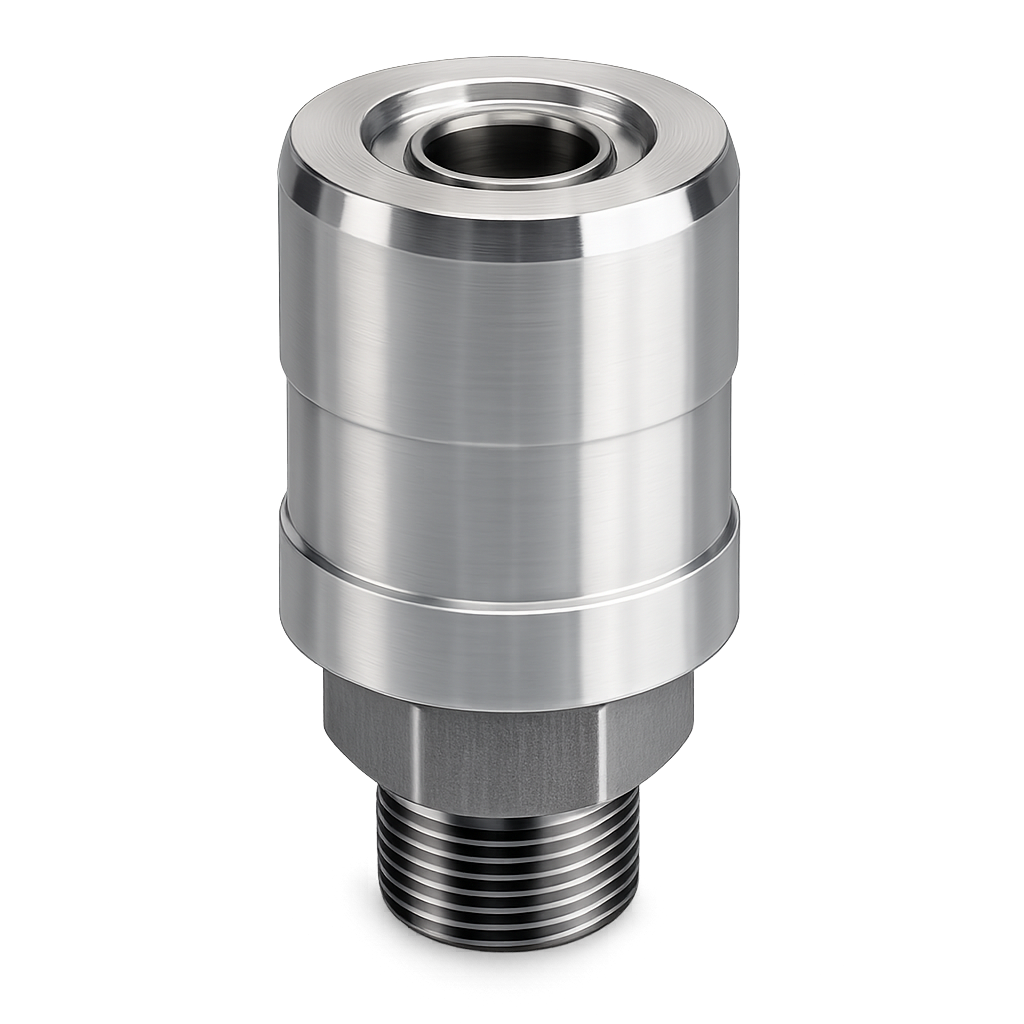
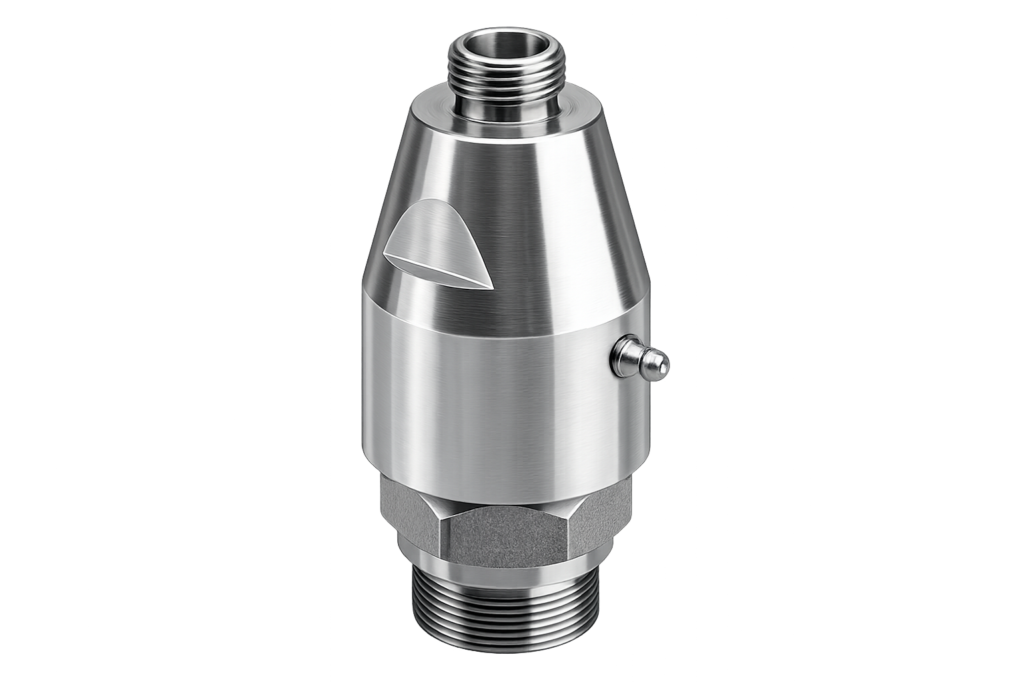
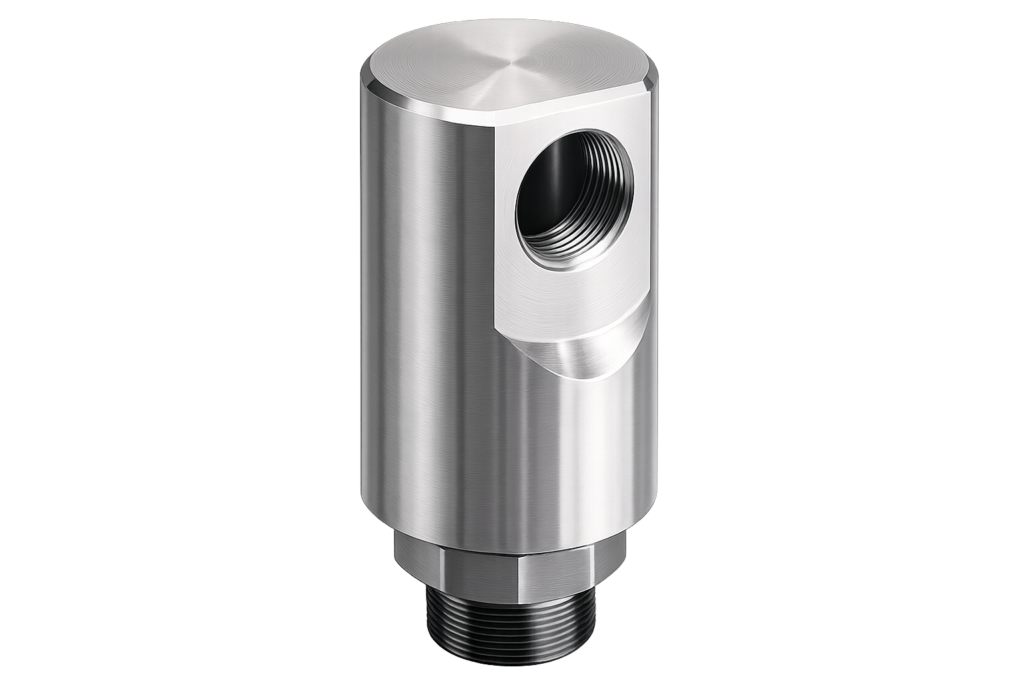
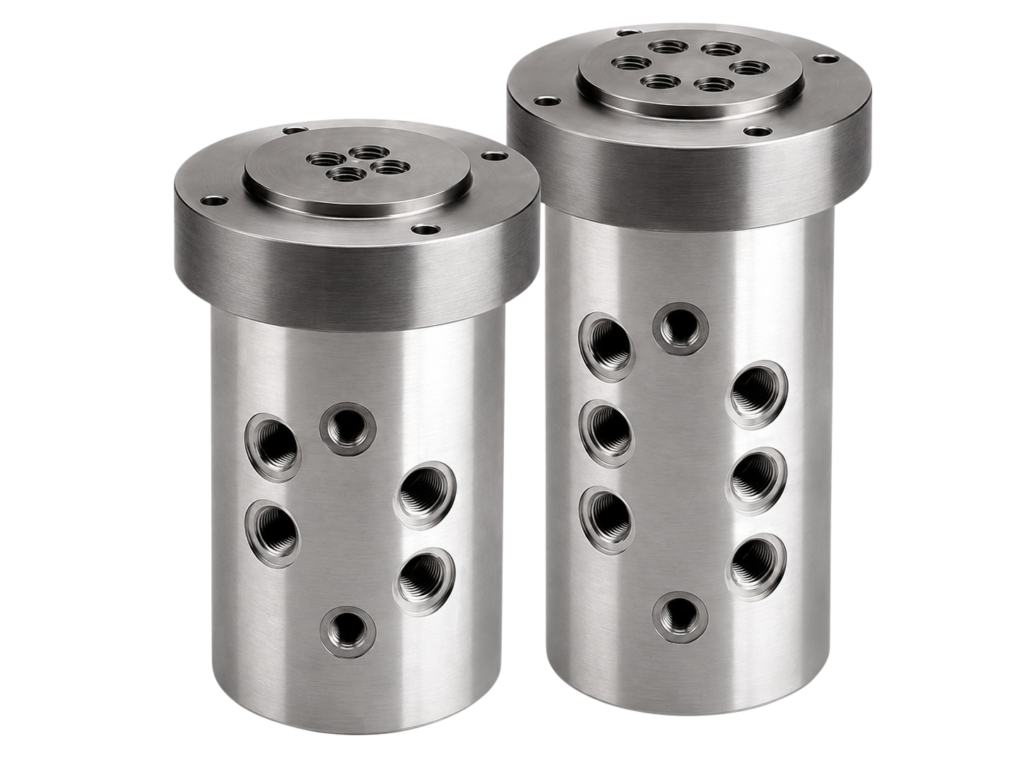
Our rotary unions for the food industry
SeriesFour standard types—choose the right design for your application:
Frequently asked questions about rotating unions
Answers to frequently asked questions about our rotary unions.
If you have any questions, please don't hesitate to contact us. You'll receive direct support from our engineering department.
Welche Anforderungen gelten für Drehdurchführungen in der Lebensmittelindustrie?
In der Getränke- und Lebensmittelproduktion gelten höchste Anforderungen an Hygiene, Produktreinheit und Prozesssicherheit. Drehdurchführungen müssen deshalb nicht nur leckagefrei und druckbeständig arbeiten, sondern auch aus lebensmittelechten Werkstoffen bestehen.
Wo kommen Drehdurchführungen in der Getränke- und Lebensmittelproduktion zum Einsatz?
Zum Beispiel in Abfüll- und Verschließanlagen (Zuführung von Getränken, Prozesswasser, CO₂ oder Reinigungsmedien zu rotierenden Füllkarussells), in Misch- und Rührwerken, in Sterilisations- und Pasteurisieranlagen, in Etikettier- und Verpackungsmaschinen sowie bei der Öldosierung in der Teig- und Snackproduktion.
Sind die Drehdurchführungen für die CIP-Reinigung geeignet?
Ja, sie transportieren flüssige Zutaten oder CIP-Laugen in rotierende Mischbehälter – ohne Eindringen von Keimen.
Wie wird eine Vermischung der Medien verhindert?
Durch hohe Prozesssicherheit ohne Medienvermischung und leckagefreien Betrieb auch bei wechselnden Drücken und Temperaturen.


