
What are the capabilities of rotary unions for steam?
Steam is one of the most demanding media for rotating unions: High temperatures, condensate formation and frequently changing pressure conditions require specially designed sealing and material solutions. Our standard series reliably cope with temperatures up to 110 °C (up to 130 °C on request); for temperatures above this or saturated high-pressure steam, we offer individually designed special versions.
Use of steam as a medium in rotating unions
Areas of applicationPaper and cardboard production
Heating of drying cylinders and calender rollers for defined moisture and gloss control of the end product.
Textile and non-woven industry
Conditioning of stenter frames, dryer drums and fusing rollers to dry textile webs quickly and evenly.
Plastic and film systems
Temperature control of chill rolls and smoothing rollers to ensure surface quality and dimensional stability of the film.
Food and beverage industry
Steam-heated cooking, sterilizing and drying applications in rotating drums or mixers for pasteurization and aroma control.
Chemical and process industry
Heat transfer in reactors, vacuum dryers, and centrifuges in which rotating components must be supplied with process steam. Note: The applications listed here are only a selection and are provided for illustrative purposes. Due to the wide range of possible applications, not all use cases can be listed here.
Advantages of our rotating unions
Temperature-resistant sealing and bearing concepts
Efficient heat transfer without leakage losses
Extended machine service life thanks to corrosion-resistant materials
Low maintenance thanks to relubricatable ball bearing design
Flexibly adaptable to different roller and spindle geometries
Special versions for higher temperatures or aggressive components possible

Conclusion
Steam-capable rotating unions ensure reliable heating of rotating systems, minimize energy losses and increase process reliability – even under demanding temperature and pressure conditions. For applications beyond the standard limits, we develop customized solutions that are precisely tailored to your operating parameters.
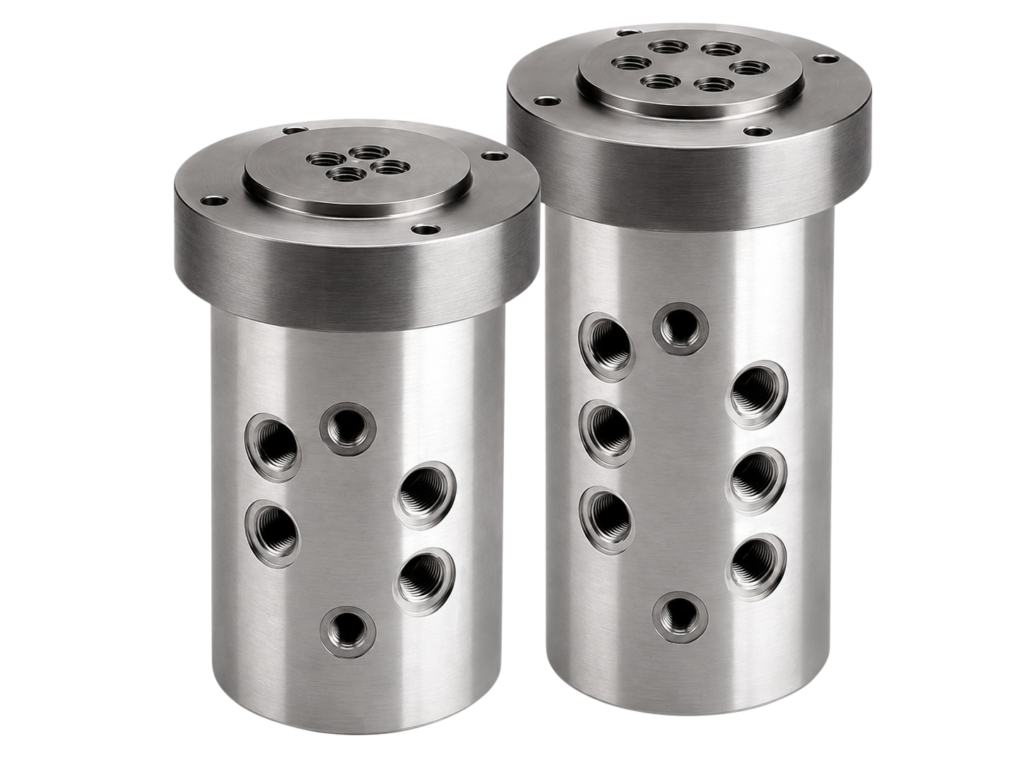
Our rotating unions for the medium steam
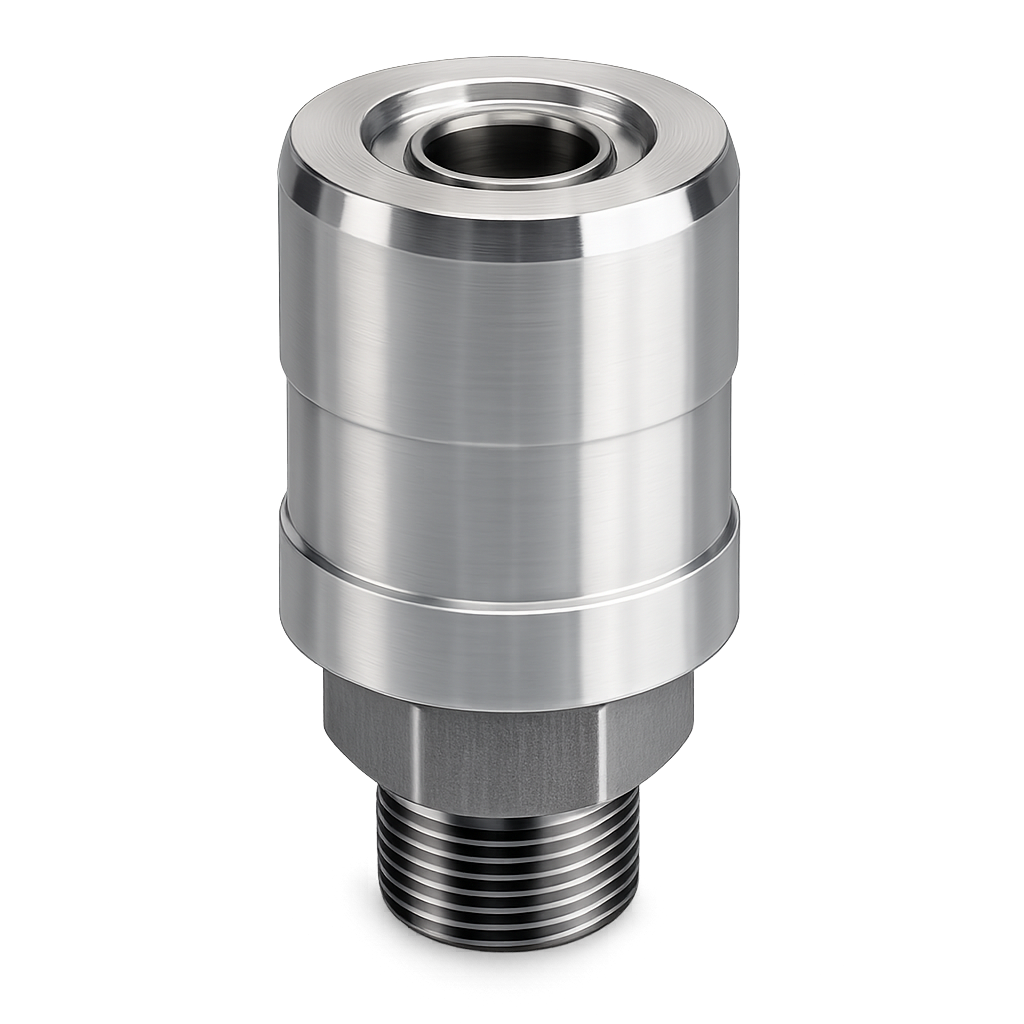
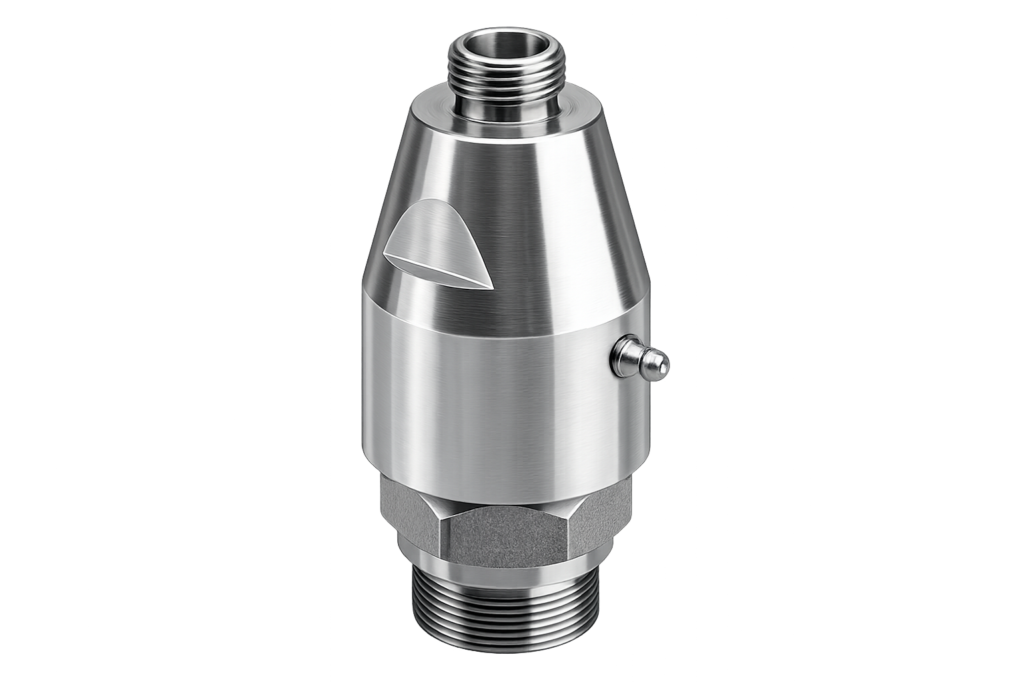
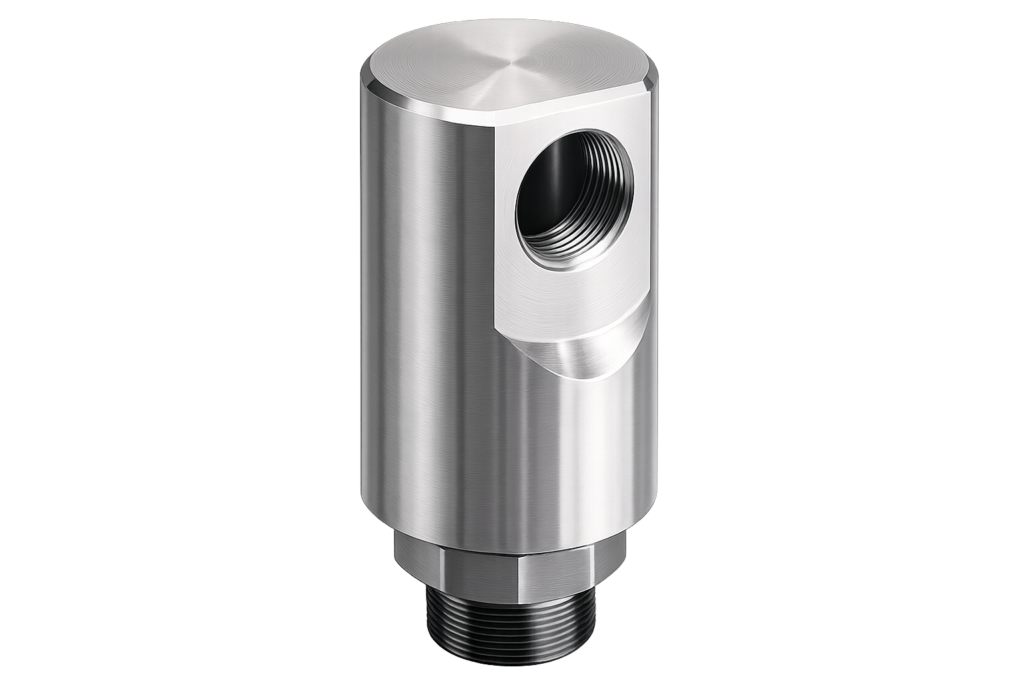
SeriesFour standard types—choose the right design for your application:
Frequently asked questions about rotating unions
Answers to frequently asked questions about our rotary unions.
If you have any questions, please don't hesitate to contact us. You'll receive direct support from our engineering department.
Bis zu welchen Temperaturen sind Dampf-Drehdurchführungen einsetzbar?
Unsere Standardbaureihen bewältigen Temperaturen bis 110 °C zuverlässig, auf Anfrage bis 130 °C. Für darüberhinausgehende Temperaturen oder gesättigten Hochdruckdampf bieten wir individuell konzipierte Sonderlösungen.
Warum ist Dampf ein anspruchsvolles Medium für Drehdurchführungen?
Hohe Temperaturen, Kondensatbildung und häufig wechselnde Druckverhältnisse erfordern speziell ausgelegte Dicht- und Werkstofflösungen.
Wo werden dampffähige Drehdurchführungen eingesetzt?
Typische Anwendungen sind die Beheizung von Trockenzylindern und Kalanderwalzen in der Papierherstellung, Trocknertrommeln in der Textilindustrie, die Temperierung von Chill-Rolls in Folienanlagen sowie dampfbeheizte Koch-, Steril- und Trocknungsanwendungen in der Lebensmittelindustrie.
Wie wartungsintensiv sind Dampf-Drehdurchführungen?
Dank nachschmierbarer, kugelgelagerter Ausführung sind sie wartungsarm. Korrosionsbeständige Werkstoffe verlängern zusätzlich die Maschinenstandzeit.


