

What do rotary unions do for vacuum applications?
Rotary feedthroughs for vacuum applications place particularly high demands on sealing technology and material selection because they have to reliably seal not overpressure but underpressure. Even the smallest leaks can disrupt sensitive processes or lead to contamination. Our solutions enable the safe transfer of cooling, rinsing or control media into rotating systems under vacuum conditions – from packaging machines to automated grippers. This keeps clean room, process or system atmospheres stable and productive.
Use of a Vacuum as a Medium in Rotary Joints
Areas of applicationNote: The applications listed are only an excerpt and are for illustrative purposes. Due to the large number of possible areas of application, not all use cases can be shown here.
Semiconductor and electronics production
Supply of media (e.g., cooling water) to rotating wafers or spindles in vacuum chambers
Packaging technology
Vacuum thermoforming, sealing and suction stations with rotating tools
Automation / Robotics
360° grippers and pick & place units that are connected to central vacuum generators via rotary feedthroughs
Pharmaceutical and laboratory technology
Stirring and mixing systems that require sterile working under negative pressure
Surface and painting technology
Rotating spray heads or coating drums in which vacuum ensures dust and particle-free conditions
Advantages of rotating unions for use with air
Leak-free operation with negative pressure
High process and product safety
Durable seal and bearing designs
Reliable at high speeds
Compact designs for small installation spaces
Reduced machine wear
Quick replacement and maintenance-friendly design
Adaptable to different media and materials
Our rotary feedthroughs for the vacuum medium
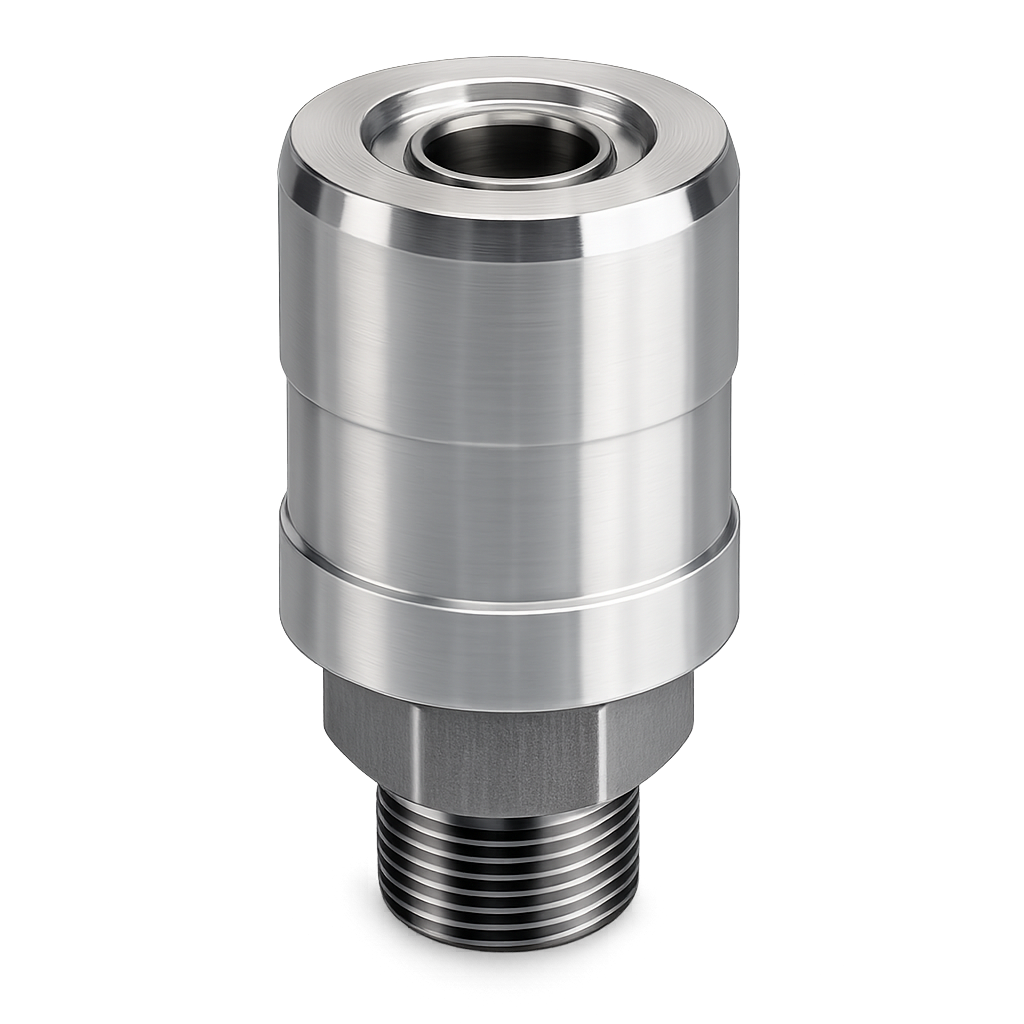
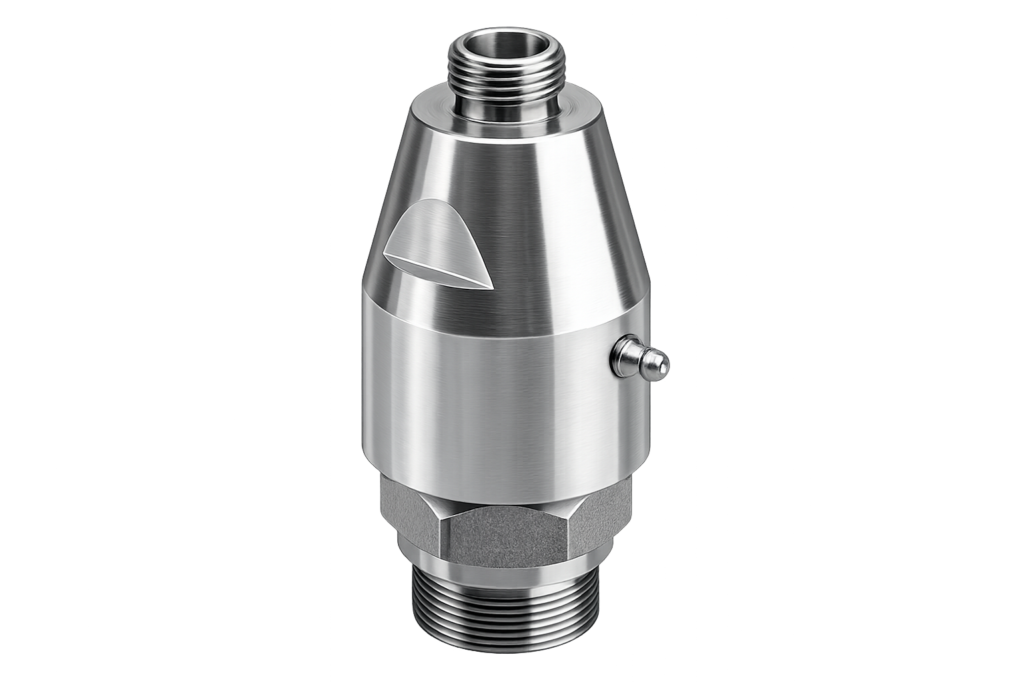
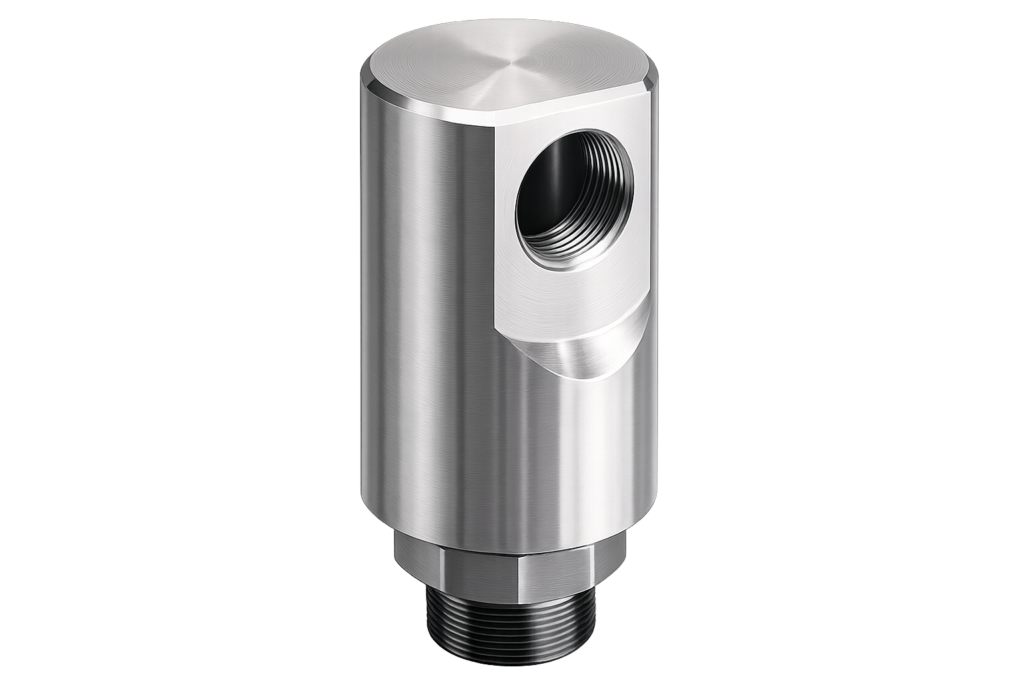
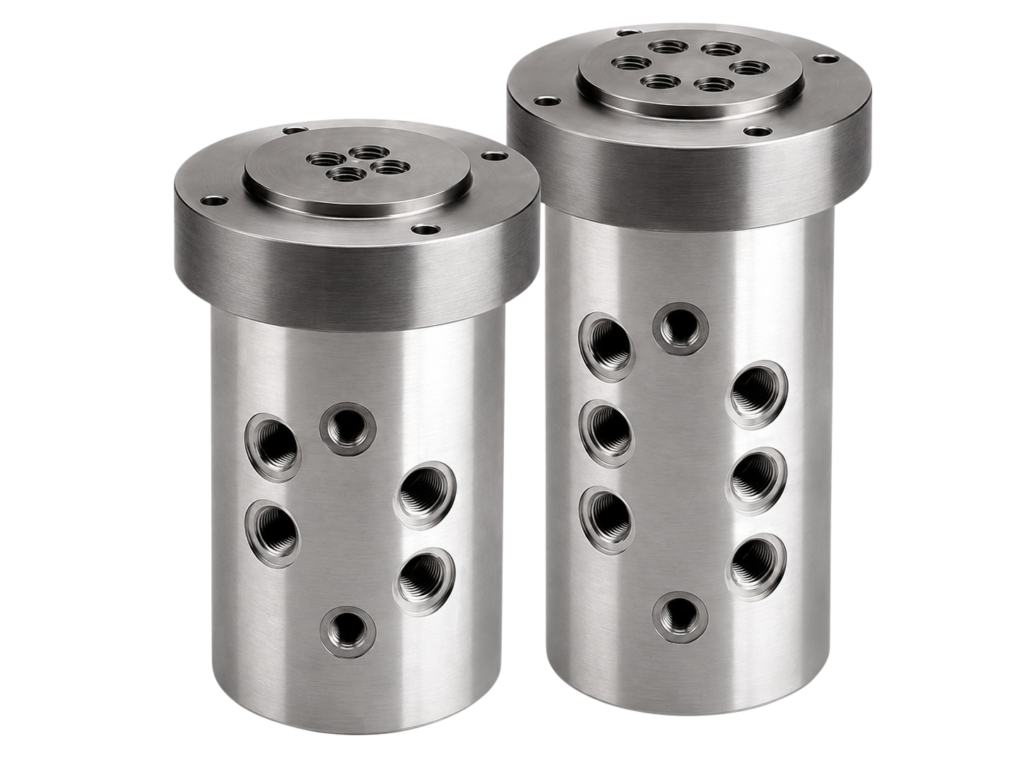
SeriesFour standard types—choose the right design for your application:
Frequently asked questions about rotating unions
Answers to frequently asked questions about our rotary unions.
If you have any questions, please don't hesitate to contact us. You'll receive direct support from our engineering department.
Was unterscheidet Vakuum-Drehdurchführungen von anderen Drehdurchführungen?
Sie müssen nicht Über-, sondern Unterdruck zuverlässig abdichten. Schon kleinste Leckagen können sensible Prozesse stören oder zu Verunreinigungen führen – das stellt besonders hohe Anforderungen an Dichtungstechnik und Werkstoffauswahl.
In welchen Branchen werden Vakuum-Drehdurchführungen eingesetzt?
Unter anderem in der Halbleiter- und Elektronikfertigung (Medienzufuhr zu rotierenden Wafern in Vakuumkammern), der Verpackungstechnik (Vakuumthermoformen), der Automatisierung und Robotik (360°-Greifer), der Pharma- und Labortechnik sowie der Oberflächen- und Lackiertechnik.
Arbeiten Vakuum-Drehdurchführungen auch bei hohen Drehzahlen zuverlässig?
Ja, langlebige Dicht- und Lagerausführungen sichern den leckagefreien Betrieb bei Unterdruck auch bei hohen Drehzahlen – bei reduziertem Maschinenverschleiß.
Gibt es kompakte Lösungen für enge Einbauräume?
Ja, kompakte Bauformen für geringe Einbauräume gehören zum Programm – wartungsfreundlich konstruiert und schnell austauschbar.


