


Why Automation Systems Need Rotary Joints
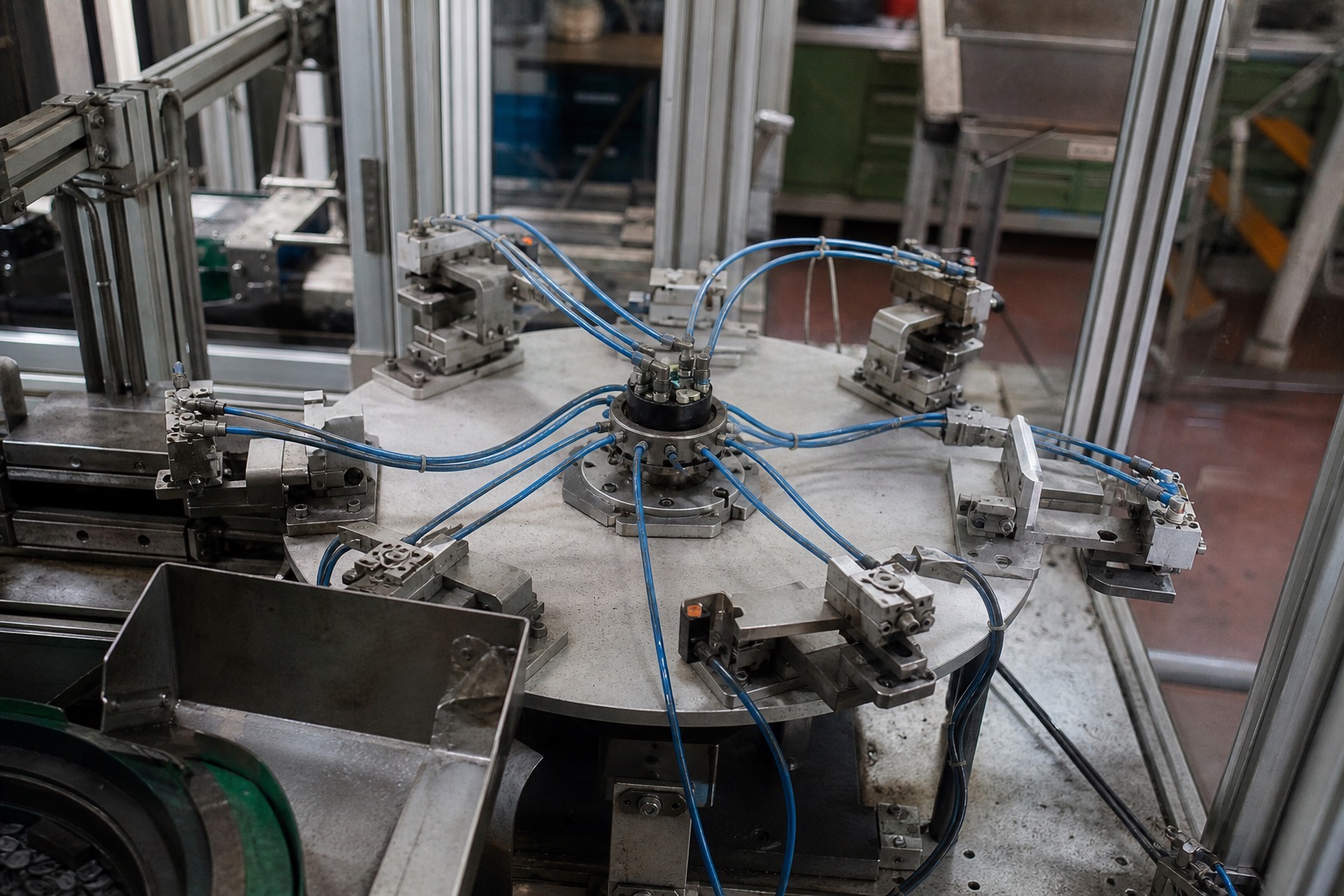
Industrial automation is constantly evolving. Modern manufacturing facilities produce faster, with greater precision, and more cost-effectively than ever before. Robots, rotary indexing tables, and automated handling systems often require compressed air, vacuum, or other process media, which must be reliably delivered to rotating assemblies.
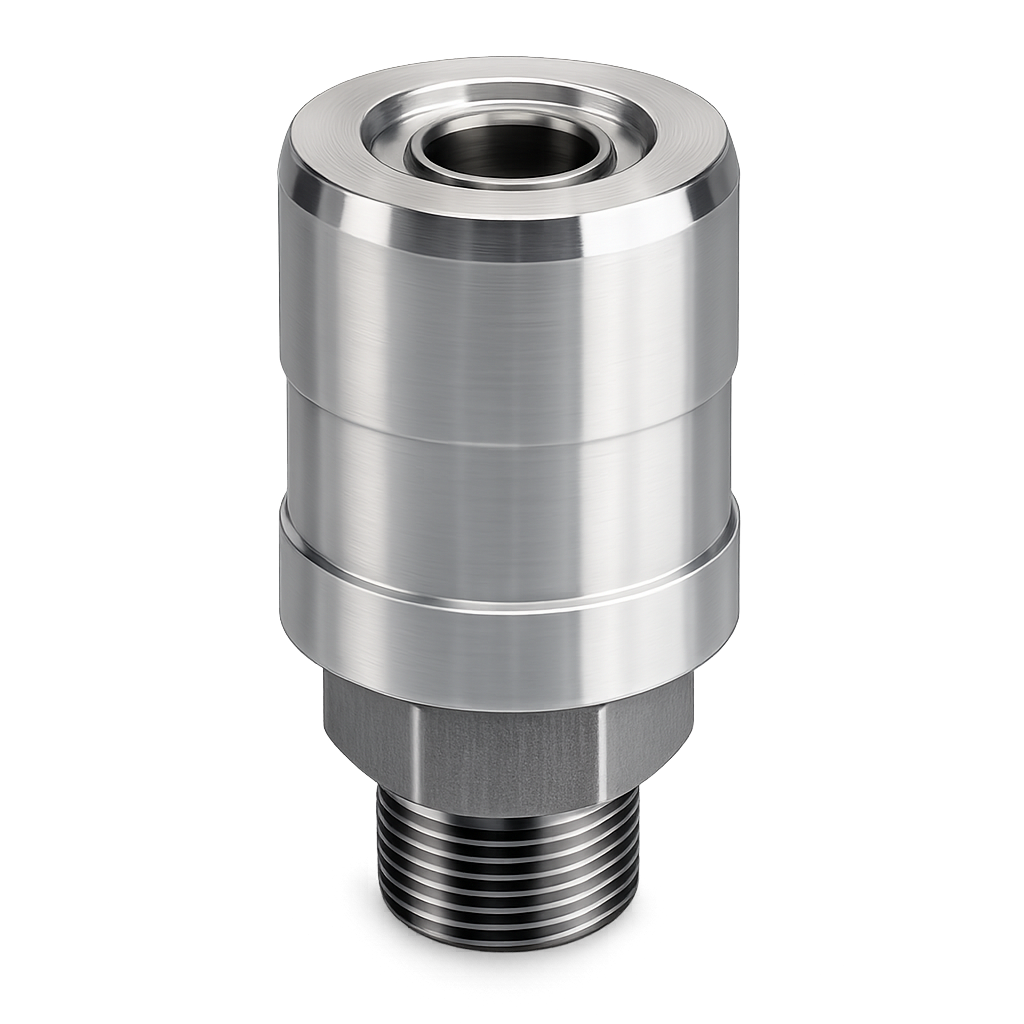
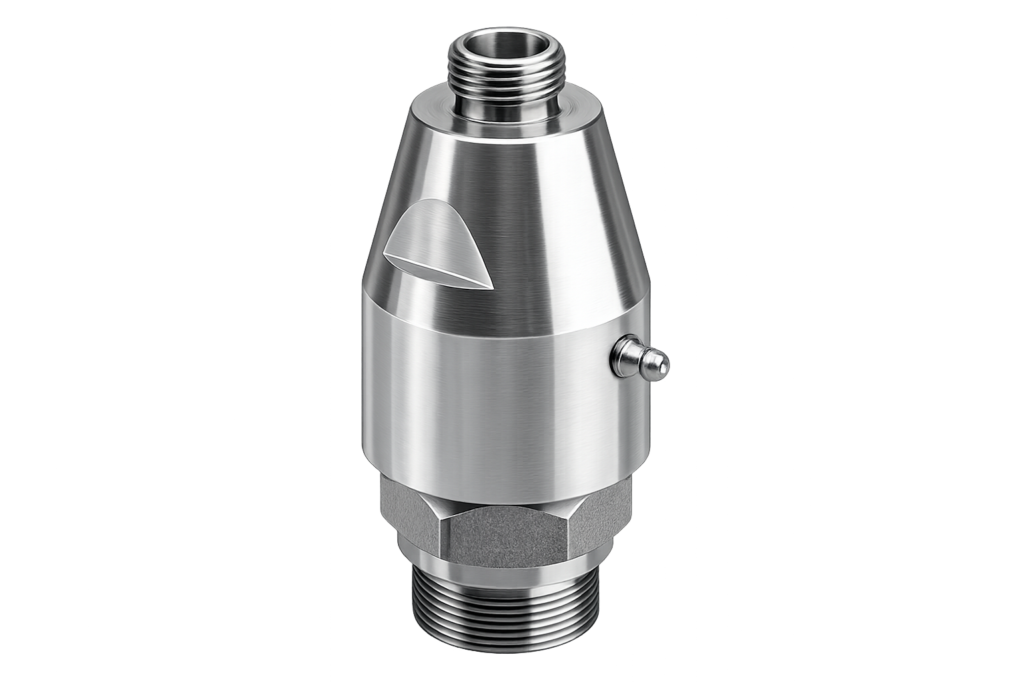
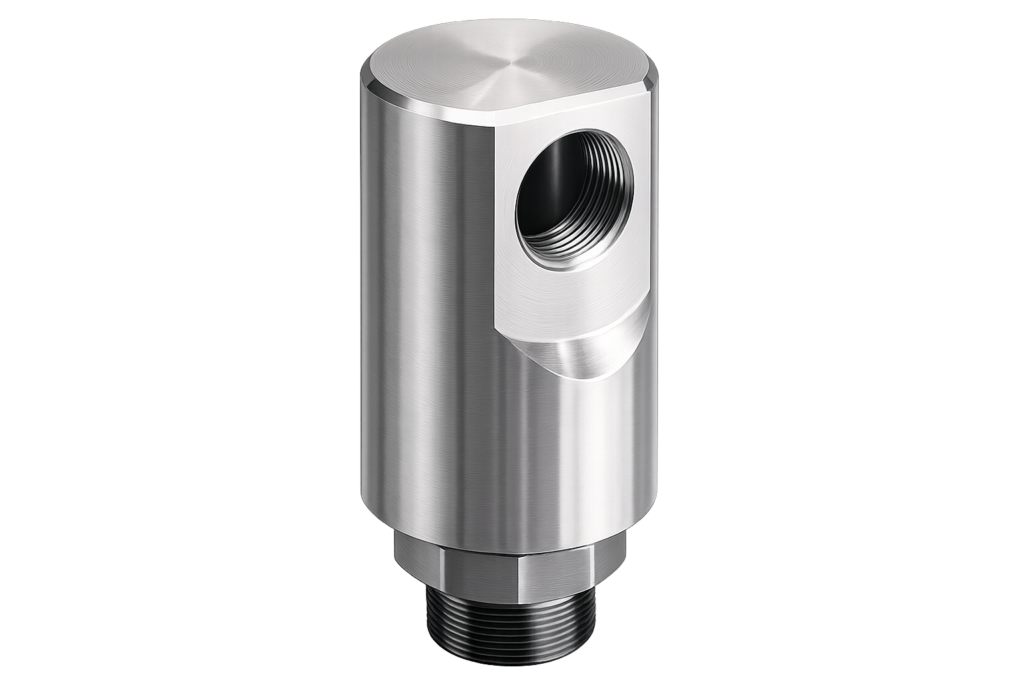
This is exactly why rotary unions are used. They ensure that pneumatic and vacuum systems continue to function reliably even during continuous rotational movements and that no hoses or lines become twisted.
Automation systems consist of numerous moving components: grippers rotate workpieces, rotary indexing tables transport parts, and robots constantly change their positions. At the same time, these systems must be reliably supplied with compressed air or vacuum. Rotary unions enable the safe transfer of media between stationary and rotating components.
Typical media
Media TransmissionVacuum
Vacuum grippers safely handle delicate workpieces such as glass, sheet metal, packaging, or plastic parts.
More Media
Inert gases, lubricants, water, coolants, hydraulic oil, and other process media.
Typical areas of application
Rotary Indexing Tables
Continuous supply of compressed air or vacuum to workpiece carriers.
Rotating Grippers
Reliable compressed air or vacuum supply, even at high cycle rates.
Industrial robots
Supply of pneumatic or vacuum-based end-effectors.
Pick-and-Place Systems
Short cycle times require reliable media transmission.
Packaging Systems
Gripping, positioning, and handling products using pneumatics and vacuum technology.
Advantages of High-Quality Rotary Joints
Reliable Media Transmission
High process reliability
Compact design
Long service life
Low maintenance requirements
High Tightness
Low wear
Easy Integration
Reduced Downtime
Cost-Effective Plant Operation
Selecting the Right Rotary Joint
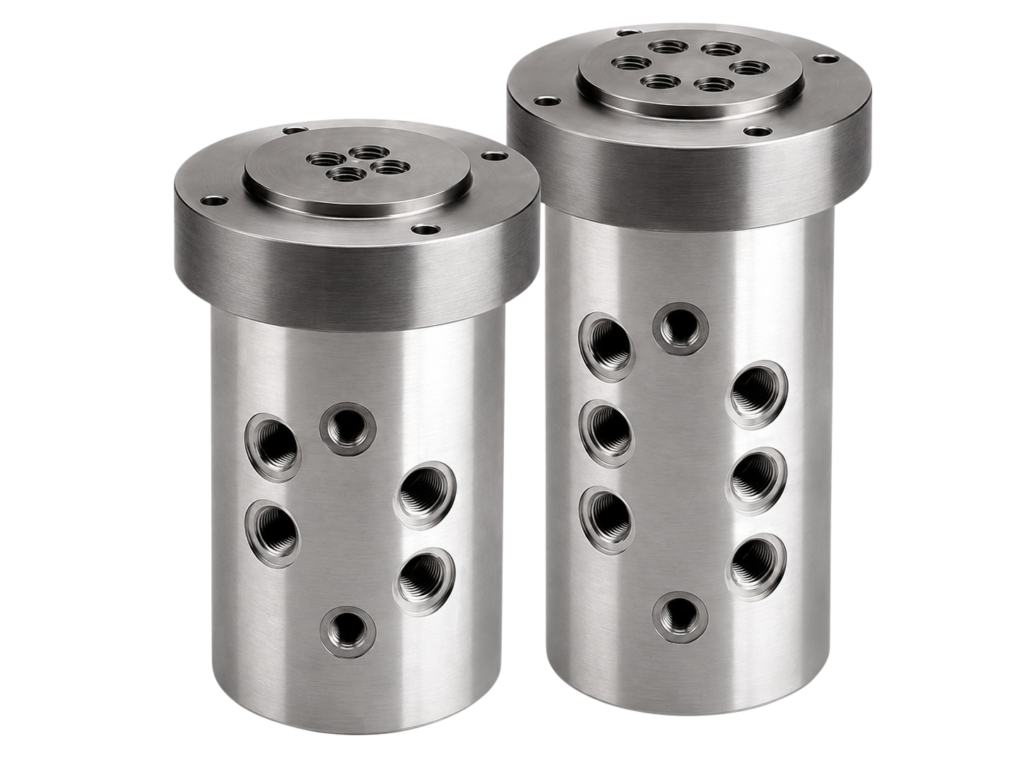
Multi-channel rotary unions as a standard in modern automation: Modern systems often require multiple media simultaneously. Multi-channel rotary unions combine several separate media channels into a single compact assembly, saving space and reducing design complexity.
Requirements: high cycle rates, compact design, low maintenance, excellent sealing performance, and long service life.
Selection criteria: type of medium, number of channels, operating pressure, speed, connection sizes, installation space, material, seal materials, temperature range, and maintenance requirements.
Maintenance and Service Life: Regular visual inspections, clean compressed air, and adherence to operating parameters extend service life and minimize downtime.