
How do rotary unions perform when handling emulsions?
Rotating unions for emulsion-based applications are specially designed mechanical connections that allow emulsions (such as oil-water mixtures) to be transported between a stationary and a rotating component without causing leakage or altering the emulsion. These rotating unions must take into account both the special physical properties of emulsions (e.g. viscosity and tendency to separate) and the mechanical requirements of the rotating machines or systems.
Use of Emulsion as a Medium in Rotary Joints
Areas of applicationNote: The applications listed are only an excerpt and are for illustrative purposes. Due to the large number of possible areas of application, not all use cases can be shown here.
Metalworking and Machining Technology
In metalworking, an emulsion of water and oil is often used as a cooling lubricant to cool and lubricate both the tools and the machined parts during milling, turning or grinding. Rotating unions transport these emulsions to the rotating tools or machine components, thus preventing overheating and abrasion. Application: Cooling circuit systems for machine tools, such as CNC lathes, milling machines, or grinding machines. Advantage: Control of tool changes or rotating grippers.
Machine tools
Emulsions are used as cooling lubricants in machine tools, e.g. for machining metal or plastic, in order to reduce the generation of heat and increase the service life of the machines and tools. Rotating unions enable the continuous transport of the emulsion to the rotating parts of the machine. Application: Supplying machine tools with cooling lubricants during operation, e.g., in drilling, turning, or milling machines. Advantage: Ensures continuous and effective cooling of rotating tools without leaks or separation of the emulsion.
Food industry
In the food industry, emulsions are often used in the production of mayonnaise, salad dressings, dressings or other emulsified foods. Rotating unions enable the safe transportation of oil-water emulsions in production plants where these components have to be constantly mixed together (agitators). Application: Emulsion mixing and processing in food production facilities, such as mixing and filling machines. Advantage: Enables a precise and continuous supply of emulsion to mixing systems while preventing separation.
Chemical industry
In the chemical industry, emulsions are used in numerous processes, e.g. in the synthesis of polymer solutions or in the petrochemical industry. Rotating unions enable the transfer of emulsions into reactive or mixed substances without impairing the quality of the emulsion. Application: Pumping emulsions in systems for producing reaction mixtures or during the storage and transport of chemicals in emulsion form. Advantage: Prevents the emulsions from separating and enables a stable chemical reaction or material processing.
Printing technology
In printing technology, emulsions such as printing inks are used in certain printing processes. Rotating unions are required to continuously convey these emulsions to the rotating printing rollers or cylinders without impairing the print quality. Application: Continuous supply of printing ink or other emulsions to printing presses. Advantage: Ensures a constant and stable supply of printing inks or other emulsions to the presses without causing disruptions or compromising quality.
Textile industry
In the textile industry, emulsions are used for various processes such as dyeing, coating and finishing of fabrics. Rotating unions are required to feed these emulsions into machines that require continuously rotating parts, such as coating machines. Application: Emulsion supply in dyeing and coating machines. Advantage: Ensures uniform and continuous distribution of emulsions on textiles without separation or runoff.
Automotive industry
In the automotive industry, emulsions are used as lubricants and coolants in various manufacturing processes. Rotating unions ensure that these emulsions are fed efficiently to machines such as milling machines or robot arms. Application: Supply of cooling and lubricating emulsions to manufacturing machines, such as those used for grinding or drilling automotive parts. Advantage: Optimization of lubrication and cooling in automotive manufacturing processes, which increases productivity and extends the service life of the machines.
Advantages of rotating unions for use with emulsion
Tightness
Prevents leaks and loss of emulsion.
Reduction of wear and tear
Protects machines and tools from abrasion and corrosion.
Increased efficiency
Minimizes downtimes and reduces maintenance costs.
Compatibility
Adaptable to different emulsions and operating conditions thanks to the selection of suitable materials for the rotating union.
Cost savings
Optimizes emulsion consumption and extends the service life of the machines.

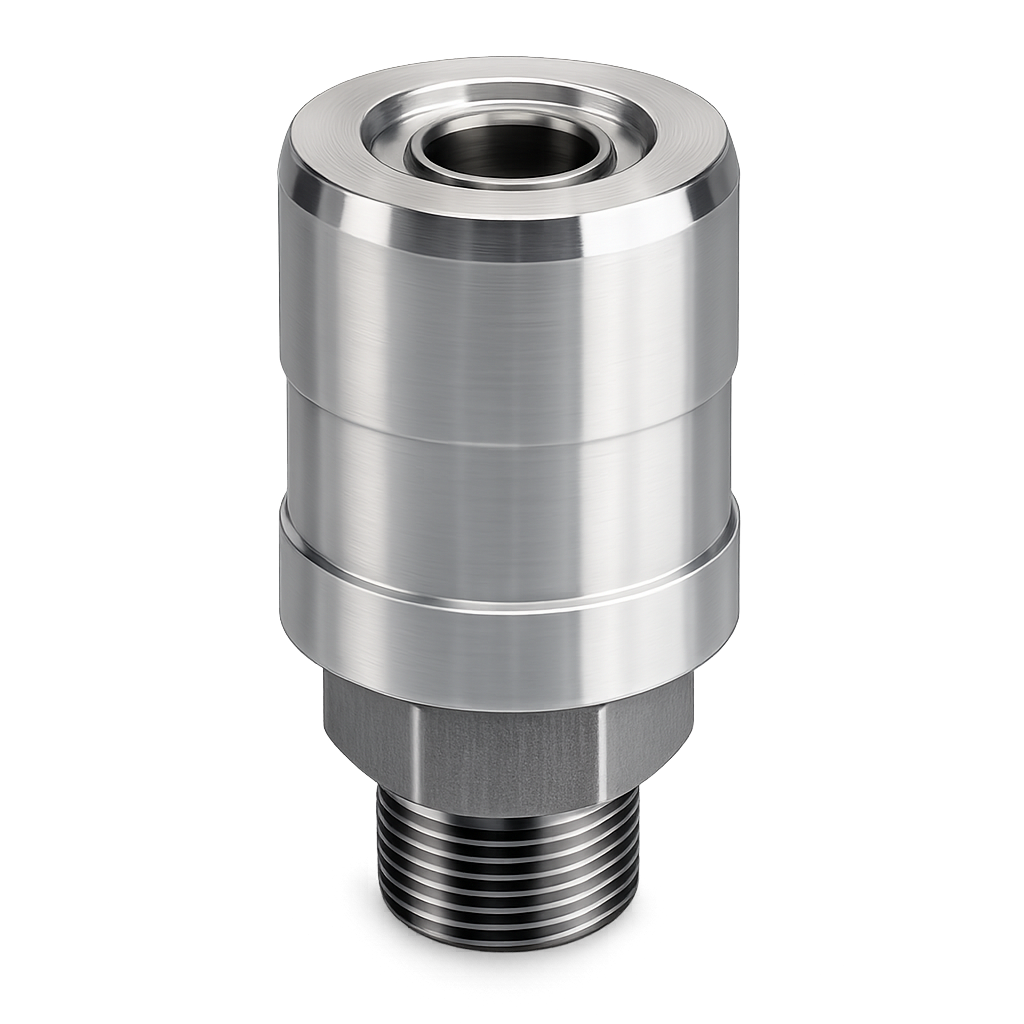
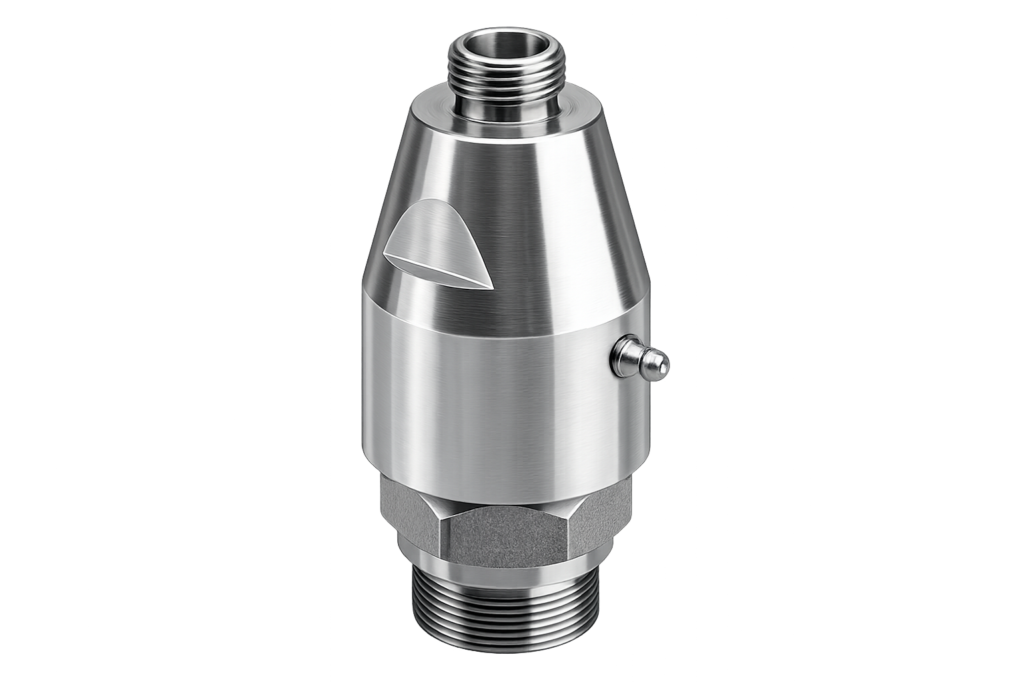
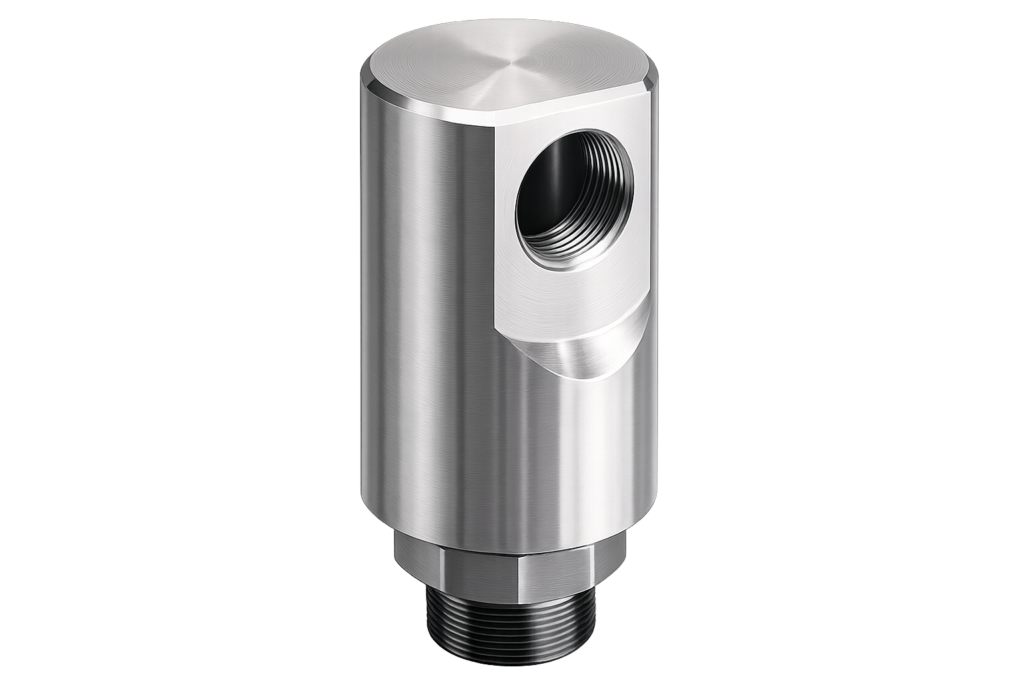
Our rotating unions for the emulsion medium
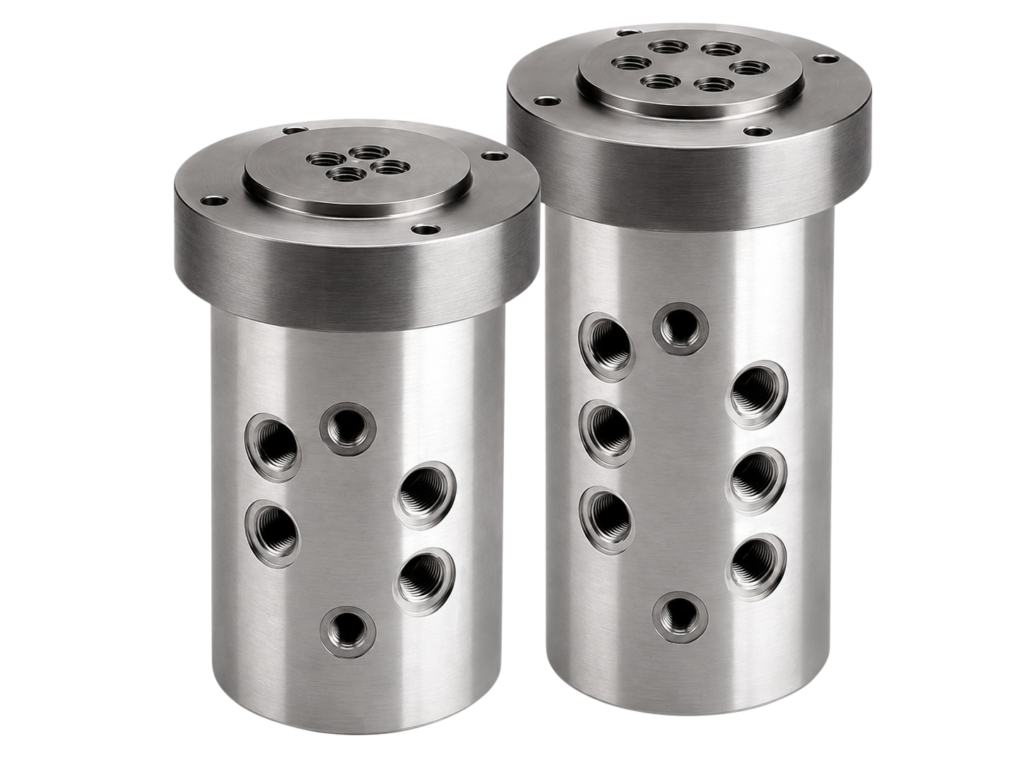
SeriesFour standard types—choose the right design for your application:
Frequently asked questions about rotating unions
Answers to frequently asked questions about our rotary unions.
If you have any questions, please don't hesitate to contact us. You'll receive direct support from our engineering department.
Was ist das Besondere an Drehdurchführungen für Emulsionen?
Emulsionen wie Öl-Wasser-Gemische müssen zwischen feststehender und rotierender Komponente transportiert werden, ohne dass es zu Leckagen oder einer Veränderung der Emulsion kommt. Die Drehdurchführungen müssen dafür die speziellen physikalischen Eigenschaften von Emulsionen beherrschen.
Wo kommen Emulsions-Drehdurchführungen typischerweise zum Einsatz?
Vor allem in der Metallbearbeitung und Zerspanungstechnik, wo Öl-Wasser-Emulsionen als Kühlschmiermittel dienen – außerdem in der Lebensmittelindustrie (etwa bei Mayonnaise oder Dressings), der chemischen Industrie, der Drucktechnik sowie der Textil- und Automobilindustrie.
Wie wird die Verträglichkeit mit unterschiedlichen Emulsionen sichergestellt?
Durch die Auswahl geeigneter Werkstoffe für die Drehdurchführung. So bleibt sie anpassungsfähig an verschiedene Emulsionen und Betriebsbedingungen und schützt Maschinen und Werkzeuge vor Abrieb und Korrosion.
Welchen wirtschaftlichen Nutzen bieten dichte Emulsions-Drehdurchführungen?
Sie verhindern den Verlust von Emulsionen, minimieren Ausfallzeiten, reduzieren den Wartungsaufwand, optimieren den Emulsionsverbrauch und verlängern die Lebensdauer der Maschinen.


