


Why Machine Tools Rely on Rotary Joints
Machine tools are among the most demanding machines in modern mechanical engineering. Whether it’s a milling machine, lathe, machining center, grinding machine, or boring machine—they all operate with high precision, at high speeds, and often in multi-shift operations. To ensure that these machines can operate reliably over the long term, various media—such as cooling lubricants, compressed air, or hydraulic oil—must be safely delivered from fixed lines to rotating components.
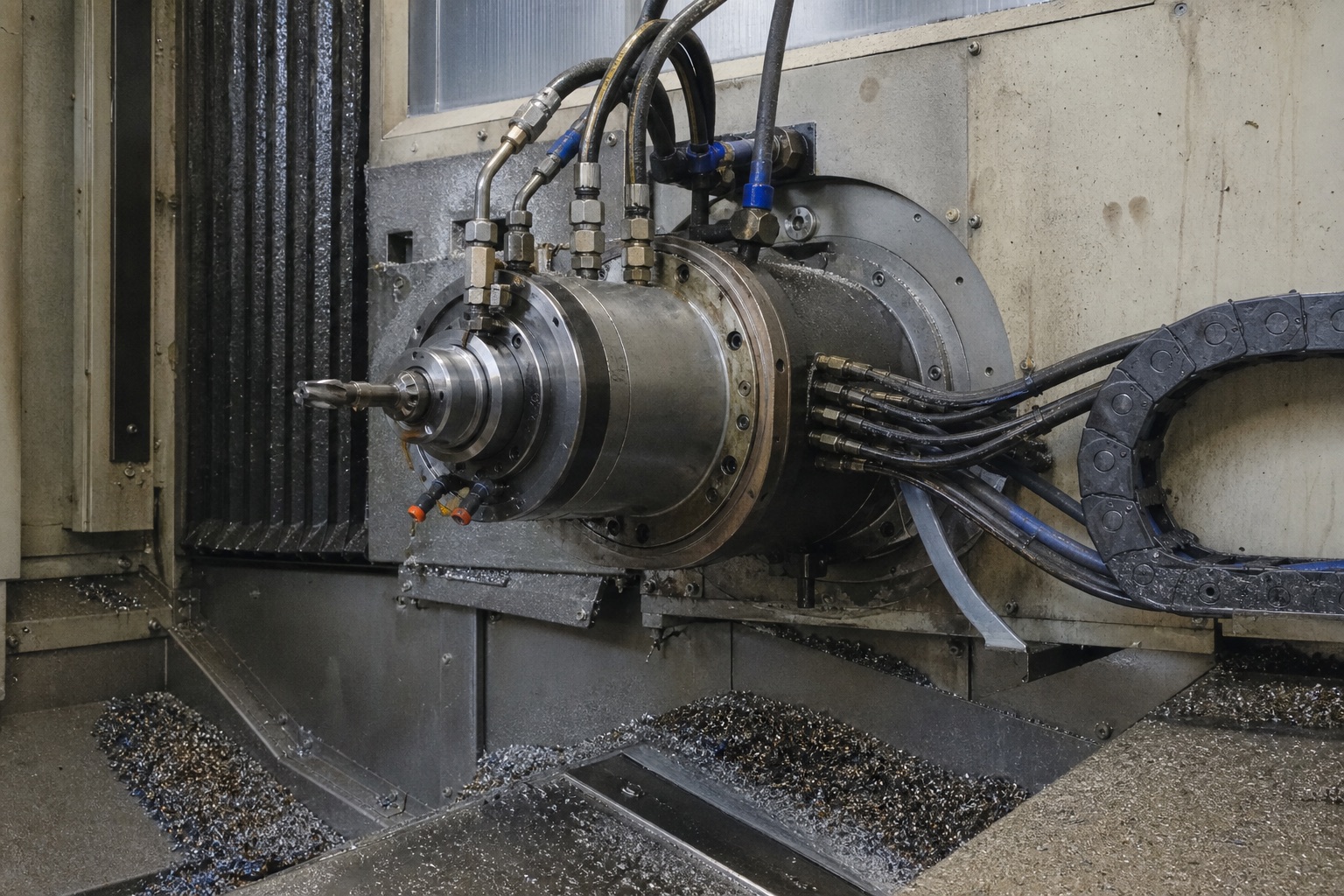
The main spindle, in particular, often rotates at several thousand revolutions per minute and must be supplied with various media simultaneously. A rotary union serves as the interface between the stationary machine and the rotating spindle: it ensures that the required medium is continuously transferred while the spindle can rotate freely.
Depending on the application, it supplies the tool spindle with cooling lubricant, delivers compressed air, hydraulically actuates clamping systems, lubricates rotating assemblies, cools tools and spindles, and delivers multiple media simultaneously. Rotary unions are indispensable today, especially in modern CNC machining centers.
Typical media
Media TransmissionCooling lubricants
They cool the cutting edge, lubricate the contact between the tool and the workpiece, remove chips, and extend tool life—with high-pressure internal cooling delivered directly through the spindle.
Compressed air
For blowing out chips, cleaning the tool taper, for pneumatic clamping systems, and during tool changes.
Lubricants
Specially designed rotary unions are used for the continuous lubrication of rotating components.
Typical areas of application
CNC Milling Machines
The supply of coolant to the tool spindle improves tool life, chip removal, machining quality, and process reliability.
Machining centers
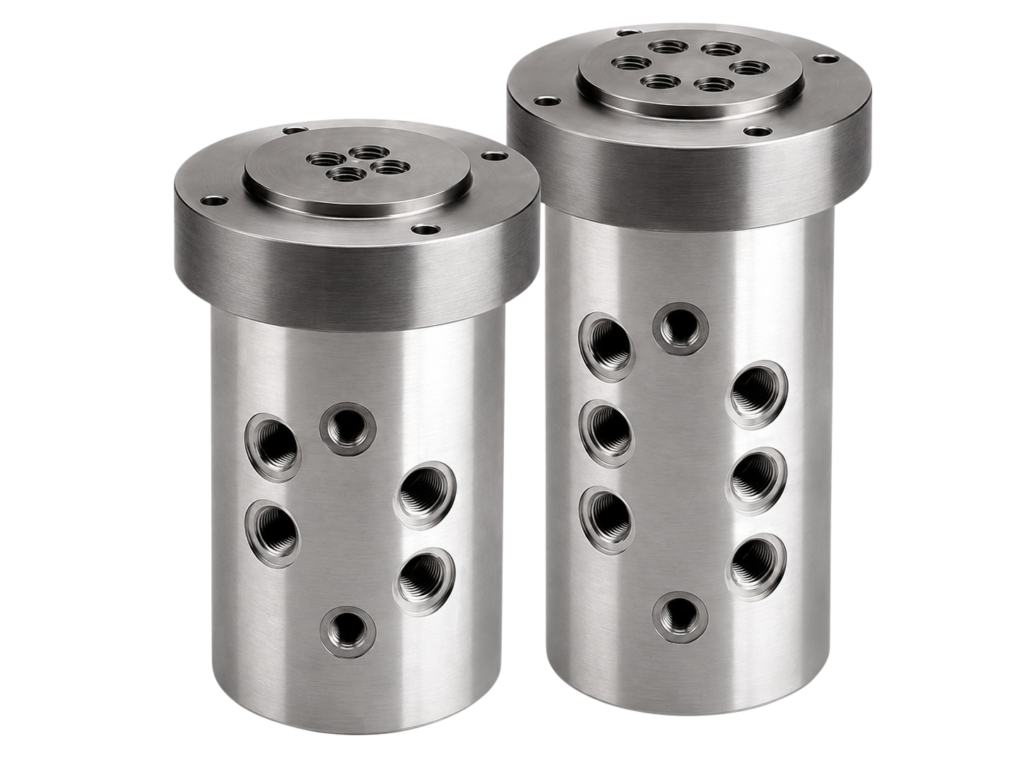
Multi-channel rotary unions simultaneously convey cooling lubricant, compressed air, and hydraulic fluid, thereby saving space.
Lathes
The internal coolant supply allows for higher cutting speeds and better surface finishes.
Grinding Machines
Reliable cooling protects the workpiece and tool from thermal effects.
Boring Mills
During deep-hole drilling, the internal coolant supply ensures reliable chip removal.
Advantages of High-Quality Rotary Joints
Reliable Media Transmission
High process reliability
Low maintenance requirements
Long service life
High pressure resistance
High speed stability
Compact design
Low wear
Reduced Downtime
Selecting the Right Rotary Joint
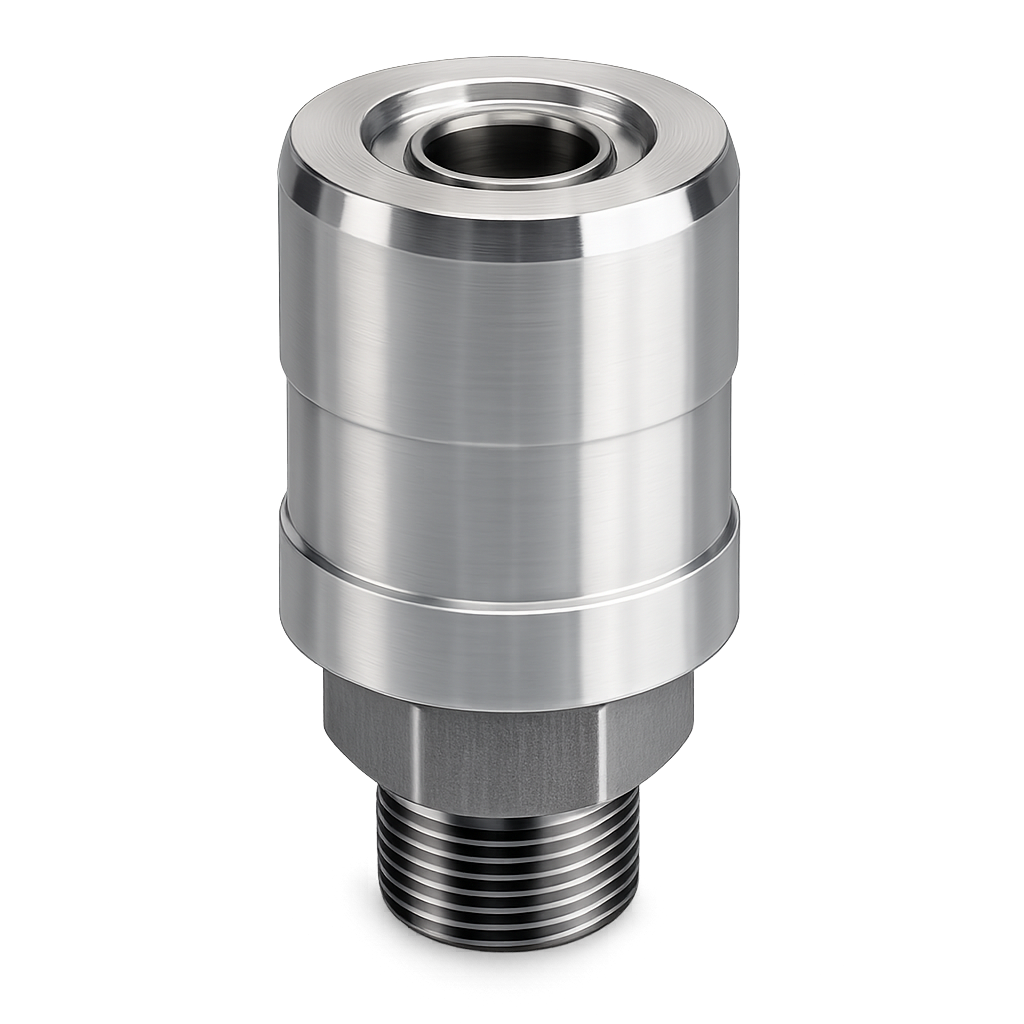
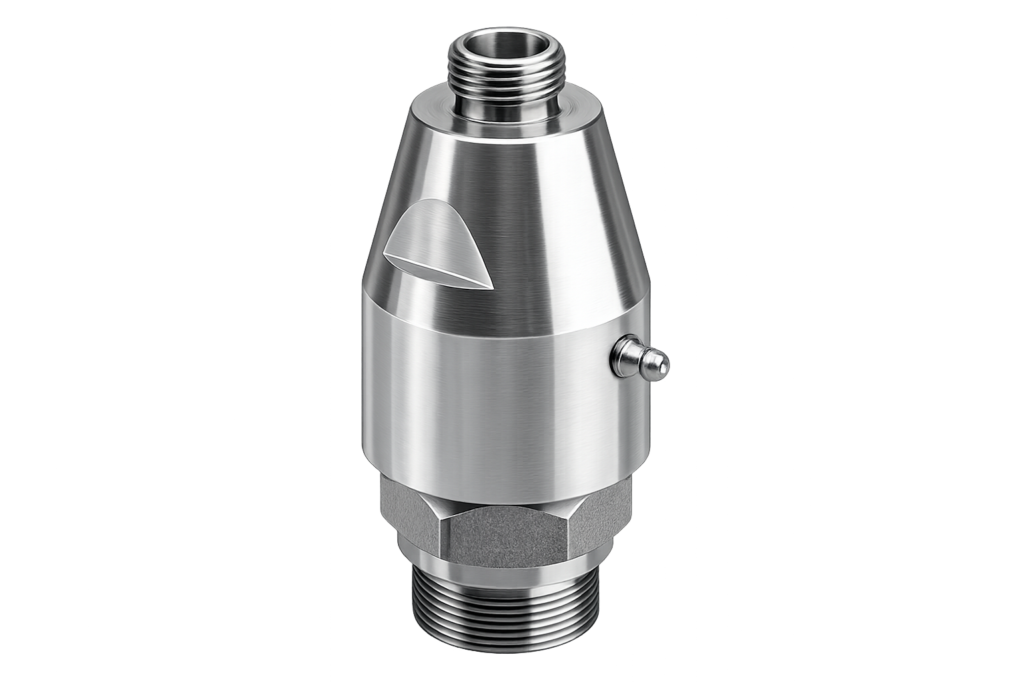
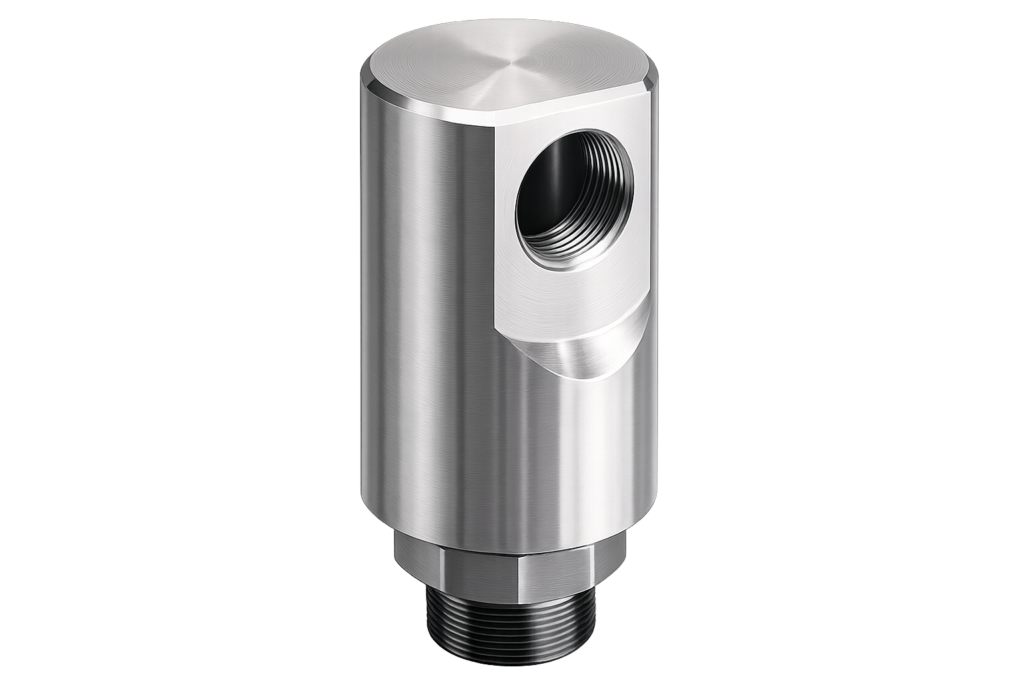
Single-channel or multi-channel? Single-channel rotary unions transfer a single medium, such as cooling lubricant, compressed air, or hydraulic fluid. Multi-channel versions transfer multiple media simultaneously—such as cooling lubricant, compressed air, hydraulic fluid, or vacuum.
Requirements: high rotational speeds, high pressures, low-leakage operation, long service life, and a compact design.
Selection criteria: type and number of media, operating pressure, temperature range, maximum speed, connection sizes, installation space, seal materials, material of construction, corrosion resistance, and maintenance requirements. Careful design ensures that the rotary union operates reliably over the long term.
Maintenance and Cost-Effectiveness: Regular maintenance, clean media, and adherence to the permissible pressure and speed ranges maximize service life. It is not the purchase price alone that matters, but rather the total cost over the service life: High-quality rotary unions reduce downtime and maintenance costs and contribute to consistently high machining quality.
Conclusion
Machine tools place the highest demands on precision, reliability, and availability. Rotary unions enable the safe and continuous transfer of cooling lubricants, compressed air, hydraulic oil, or other media between stationary and rotating machine parts. They play a key role in ensuring process reliability, cost-effectiveness, and system availability in modern machine tools.