
What do rotary unions do for water?
Rotating unions, also known as rotary couplings, are essential components for water-based applications where liquid media such as water or coolants need to be transferred at high speed and under pressure. These feedthroughs allow fluids to be fed into rotating systems such as rollers, spindles or drums without causing leaks or disruptive wear.
Use of Water as a Medium in Rotary Joints
Areas of applicationNote: The applications listed are only an excerpt and are for illustrative purposes. Due to the large number of possible areas of application, not all use cases can be shown here.
Paper and textile industry
Cooling Rolls : : Rotary unions are used to cool the rolls by supplying water and maintaining a uniform roll temperature, which improves the quality of the manufactured products. Drying rolls : Rotary unions channel water or steam through the rolls to ensure optimal drying of the final product.
Steel and metal processing
Rolling mills: For cooling rolls and lubricating bearings to ensure a consistent temperature and reduced wear under high loads. Machining equipment: Rotating through-feeds supply rotating tools with cooling emulsion to dissipate heat from the cutting tools and lubricate the cutting edge. This results in increased tool life and improved surface finish.
Food and beverage industry
Processing Equipment: In food processing—for example, in rotating drums or conveyor systems—rotary unions are used to supply water for cleaning or cooling. Bottle Filling Lines: Rotary unions help dispense cleaning and disinfecting agents as well as water for cleaning the bottles.
Chemical and pharmaceutical industry
Reactors and Mixers: To dissipate heat from rotating components in reactors and mixers, rotary unions are operated with cooling water. Drying Processes: Rotary unions supply rotating dryers and centrifuges with water or temperature-controlled air to regulate the drying process.
Mechanical engineering and automotive industry
Machining Centers: Rotary unions supply cutting tools and milling spindles with coolant to prevent the spindles from overheating and/or to extend tool life. High-pressure cleaning systems: In rotating cleaning systems—such as those used for cleaning car bodies—water is fed through rotary unions to ensure uniform cleaning of rotating high-pressure nozzles.
Power generation
Power Plants: In hydroelectric power plants and steam turbines, rotary unions are used for cooling and lubrication to protect rotating shafts and turbines from overheating.
Advantages of rotating unions for use with water
Efficient cooling
Ensures constant cooling of rotating components and prevents overheating.
Reduction of machine wear
Reduces friction and extends the service life of components.
Improved process quality
Stabilizes the temperature, resulting in high product quality.
Environmentally friendly and cost-efficient
Water is inexpensive and environmentally friendly.
Reliability at high speeds and pressures
Safe operation even under demanding conditions.
Flexible adaptation to different media
Compatible with various water-based liquids.
Easy maintenance and replacement
Maintenance-friendly design, minimizes downtimes.
Increased machine performance
Enables higher speeds and power levels, increases productivity.
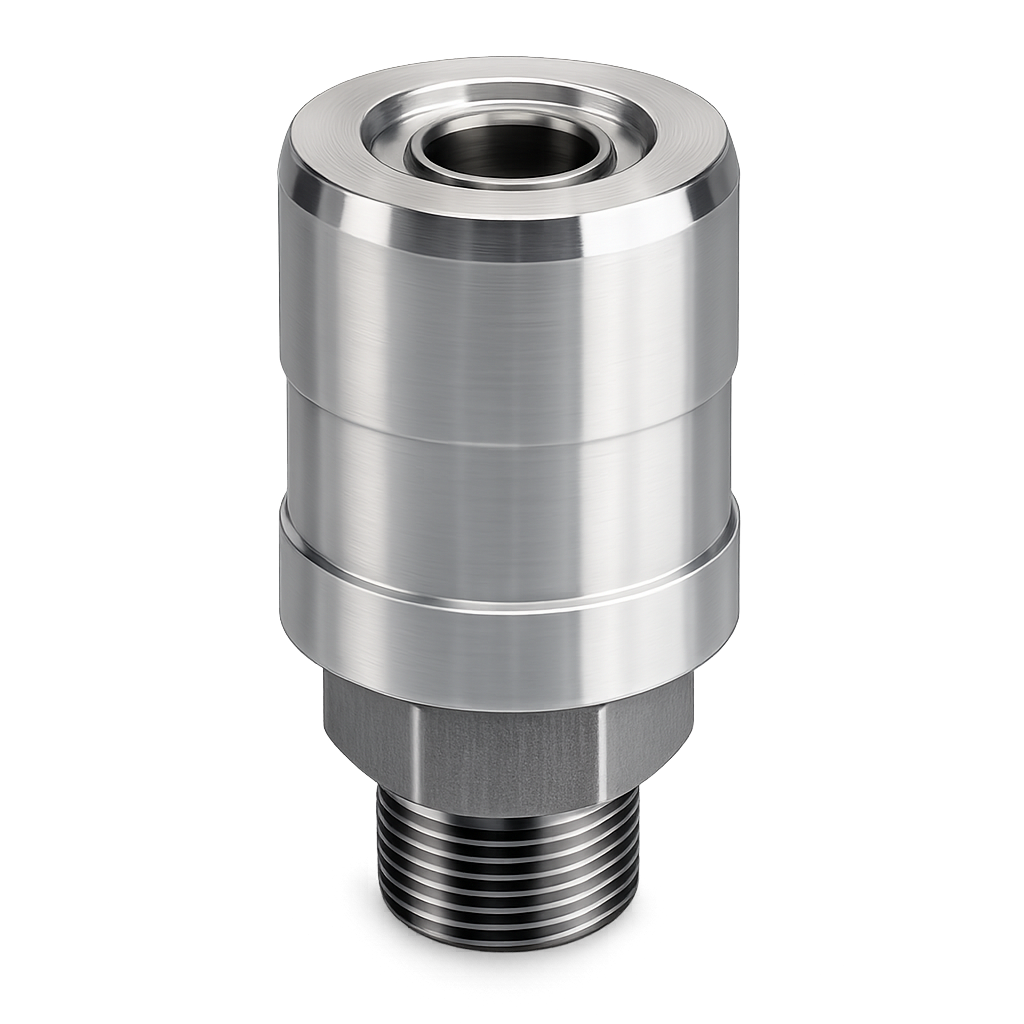
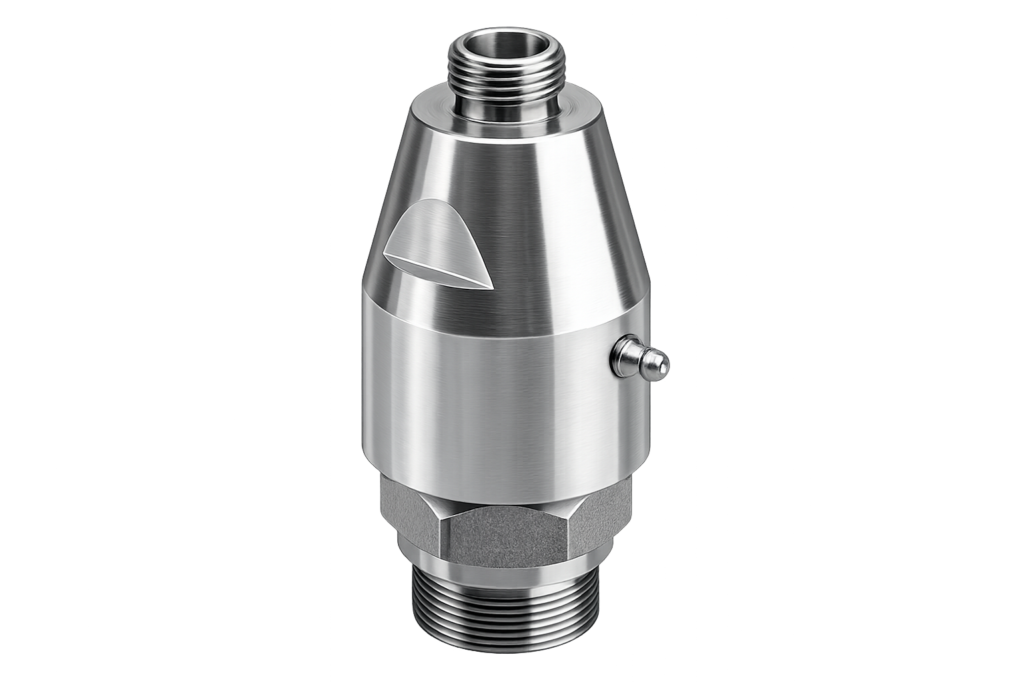
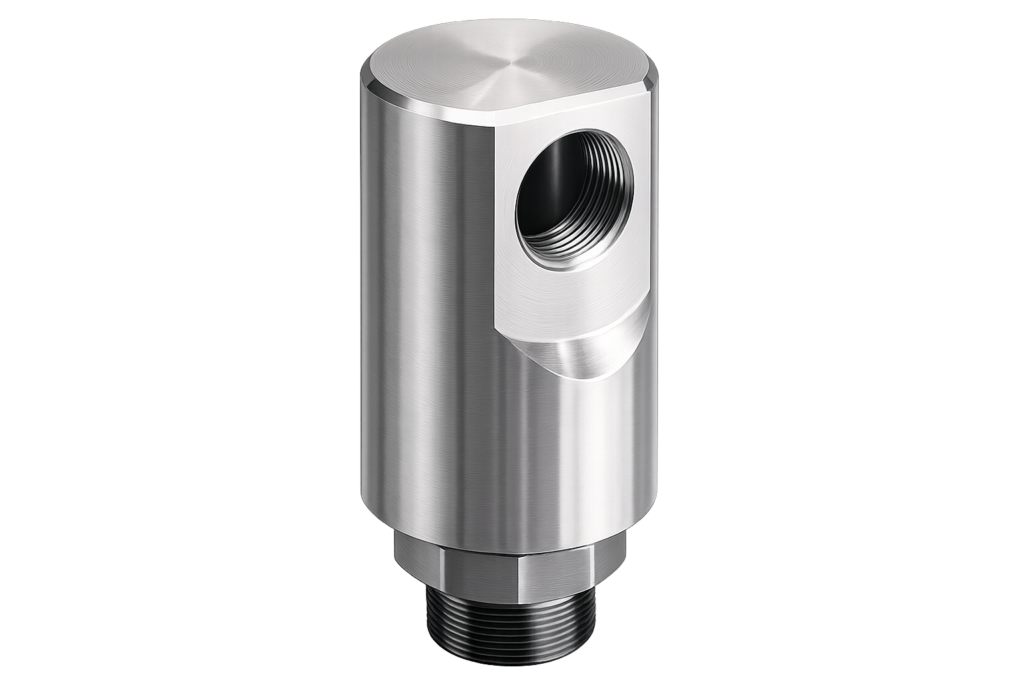
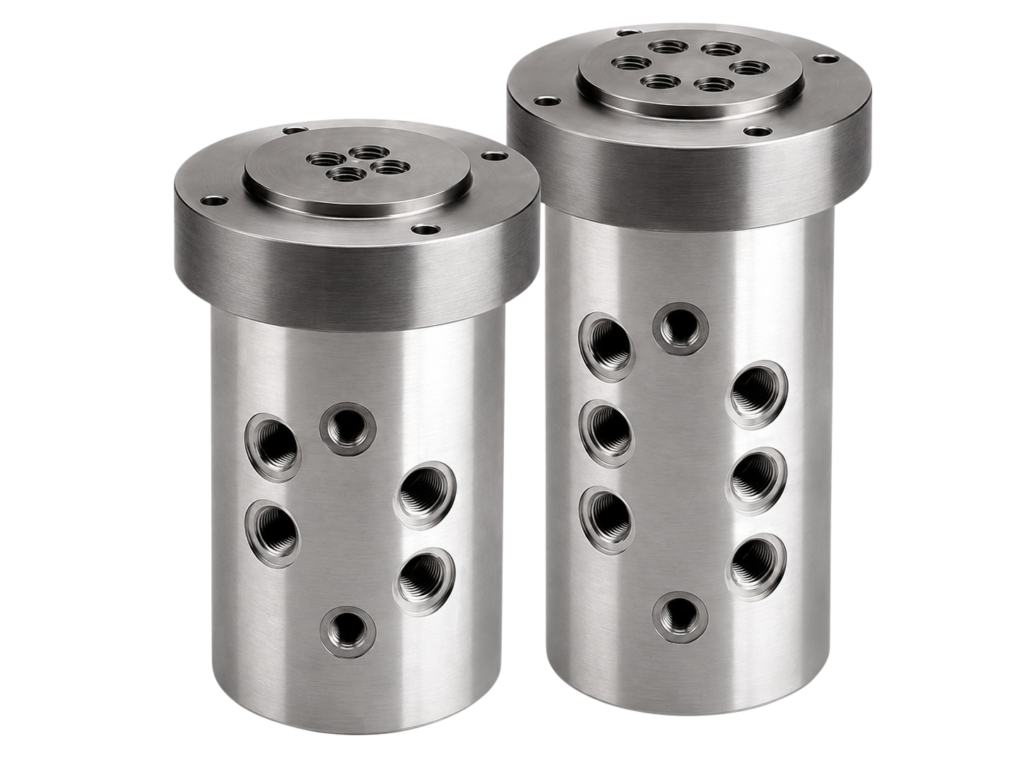
Our rotating unions for the medium water
SeriesFour standard types—choose the right design for your application:
Frequently asked questions about rotating unions
Answers to frequently asked questions about our rotary unions.
If you have any questions, please don't hesitate to contact us. You'll receive direct support from our engineering department.
Wofür werden Drehdurchführungen für Wasser eingesetzt?
Sie leiten Wasser und Kühlflüssigkeiten in rotierende Systeme wie Walzen, Spindeln oder Trommeln – zum Beispiel zur Kühlung von Kühlwalzen in der Papier- und Textilindustrie, von Walzen in der Stahl- und Metallverarbeitung oder von Frässpindeln in Bearbeitungszentren.
Welche Vorteile bietet Wasser als Medium?
Wasser ist kostengünstig und umweltfreundlich. Es sorgt für konstante Kühlung rotierender Bauteile, verhindert Überhitzung, verringert Reibung und verlängert so die Lebensdauer der Komponenten.
Arbeiten Wasser-Drehdurchführungen auch bei hohen Drehzahlen und Drücken zuverlässig?
Ja, sie sind für den sicheren Betrieb unter anspruchsvollen Bedingungen ausgelegt und ermöglichen höhere Geschwindigkeiten und Leistungsstufen. Die wartungsfreundliche Konstruktion minimiert zudem Ausfallzeiten.
Sind die Drehdurchführungen auch mit anderen wasserbasierten Flüssigkeiten kompatibel?
Ja, sie lassen sich flexibel an verschiedene wasserbasierte Medien wie Kühlflüssigkeiten anpassen.


