

What do rotary unions do for hydraulic systems?
Hydraulic systems use pressurized fluids – usually hydraulic oil – to transmit forces precisely and with low losses. In rotating applications, these media must be fed from stationary lines into rotating shafts, cylinders or devices without leakage. Our standard rotary feedthroughs ensure a constant volume flow of up to 30 bar (higher pressures on request) while maintaining oil purity and pressure stability. This means that motion sequences in injection molding machines, test benches or tool spindles remain reliable and reproducible.
Use of hydraulic oil in rotating unions
Areas of applicationNote: The applications listed here are merely a selection and are provided for illustrative purposes. Due to the wide range of possible applications, not all use cases can be covered here.
Injection molding and blow molding machines
Supply of hydraulic oil to rotating core pulls or index plates for precise tool movements.
Pressing and forming technology
Supply of rotating upper or lower punches with hydraulic pressure to ensure uniform pressing forces.
Testing and calibration systems
Rotating unions conduct test oil to rotating test specimens (e.g. shafts, couplings) and enable reliable function and leak tests.
Wind energy and pitch systems
Hydraulic control of rotor blade adjustment in onshore and offshore turbines, in which the oil is guided through rotating shafts.
Machine tools
Supply of clamping systems or hollow shaft spindles with hydraulic oil for fast tool changes and stable clamping forces.
Advantages of our rotating unions
Pressure-stable operation up to 30 bar, higher pressures possible as a special solution
Leakage-free power and signal transmission during rotation
Constant volume flows for reproducible movements
Robust, low-wear sealing and bearing technology
Low maintenance due to relubricatable ball bearings
Compact designs for tight installation situations
Quick replacement thanks to modular design
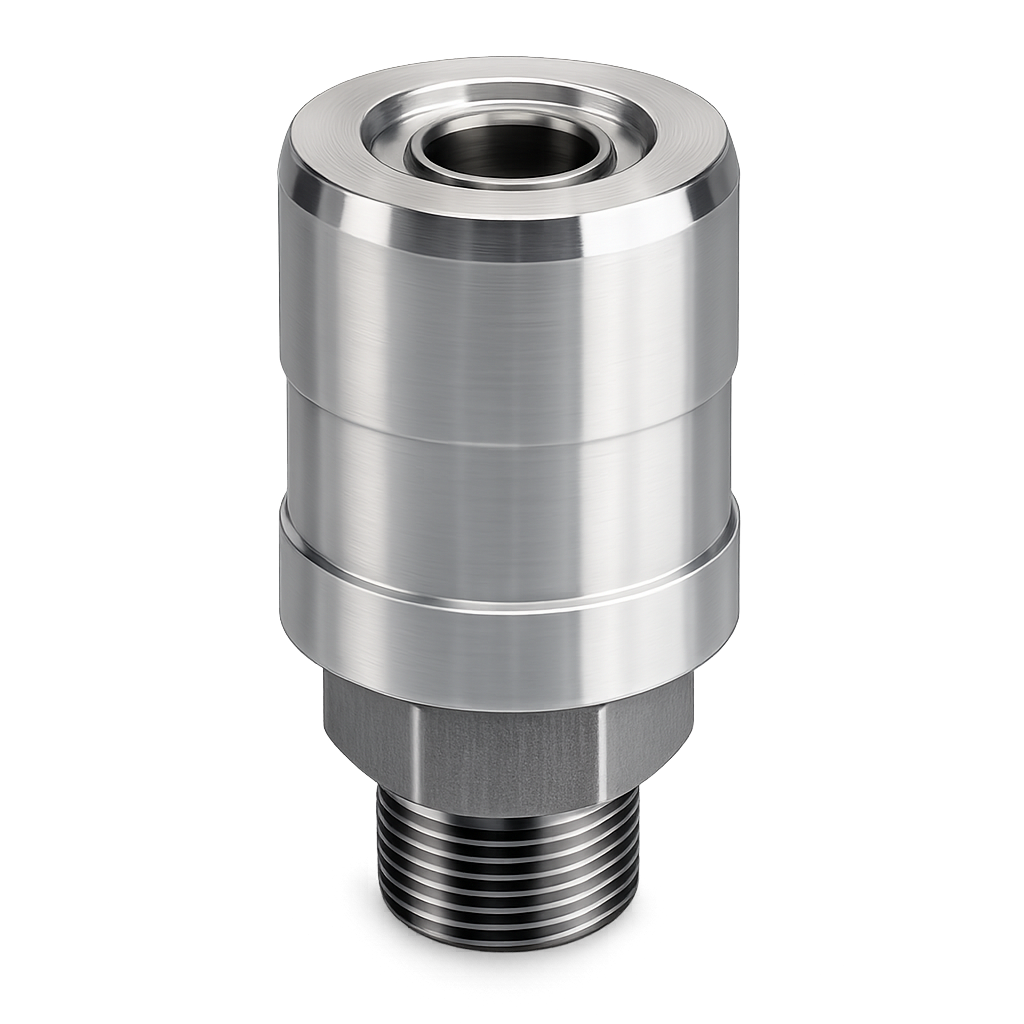
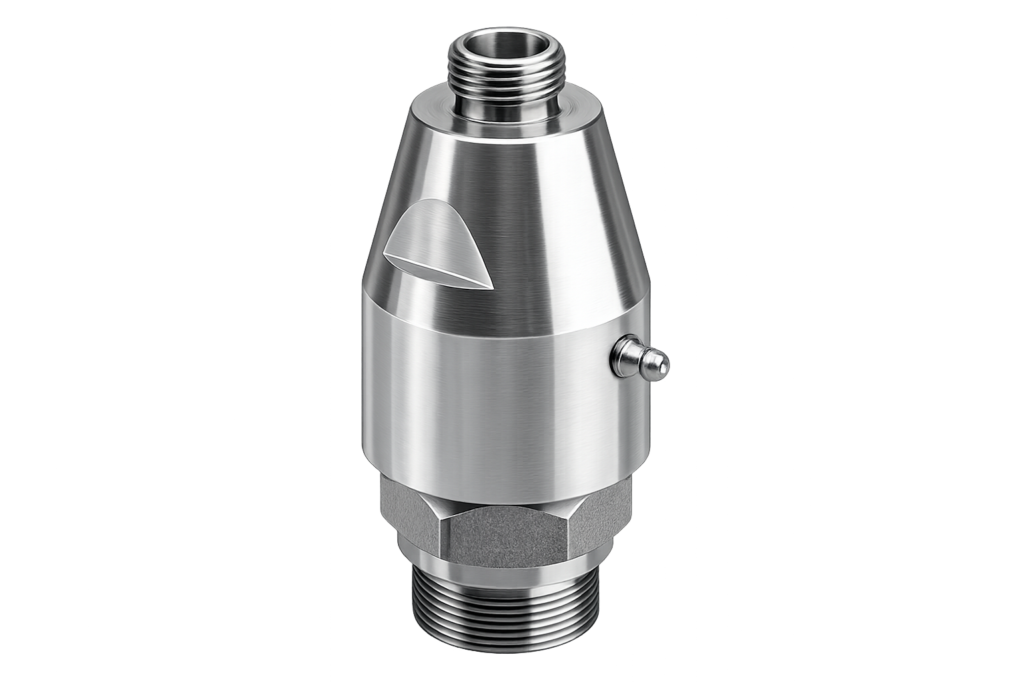
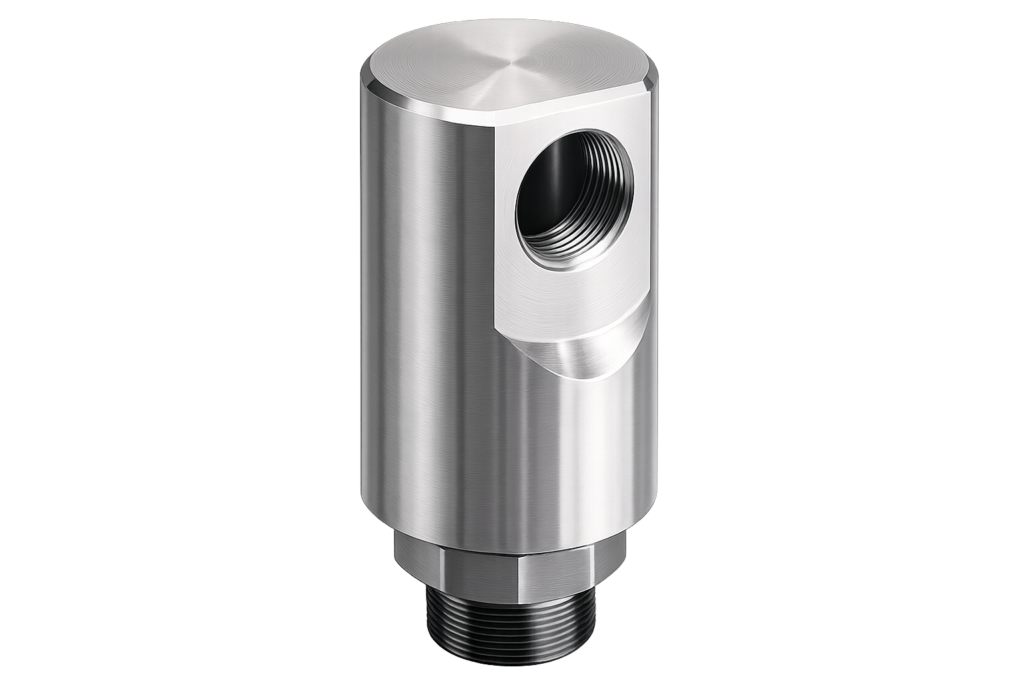
Our rotating unions for hydraulic systems
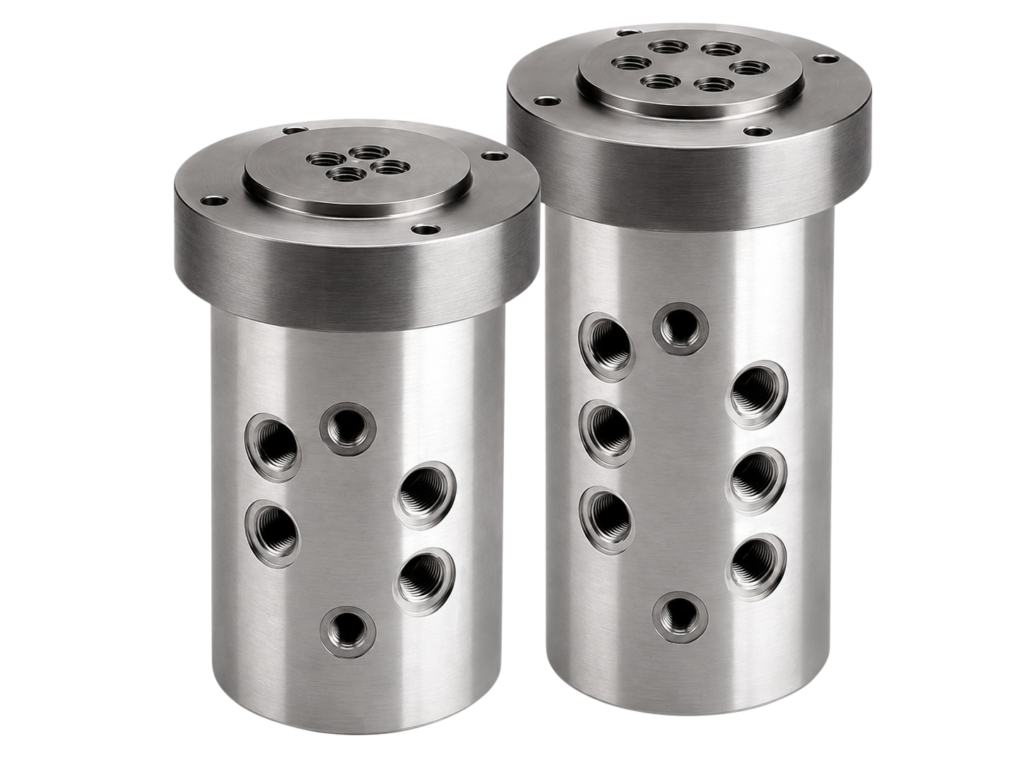
SeriesFour standard types—choose the right design for your application:
Frequently asked questions about rotating unions
Answers to frequently asked questions about our rotary unions.
If you have any questions, please don't hesitate to contact us. You'll receive direct support from our engineering department.
Bis zu welchem Druck arbeiten Hydraulik-Drehdurchführungen?
Unsere Standard-Drehdurchführungen sichern einen konstanten Volumenstrom bis 30 bar. Höhere Drücke realisieren wir auf Anfrage als Sonderlösung.
Wo kommen Hydraulik-Drehdurchführungen zum Einsatz?
Etwa in Spritzguss- und Blasformmaschinen (Hydrauliköl für rotierende Kernzüge), in Pressen und Umformtechnik, in Prüf- und Kalibrieranlagen, bei der hydraulischen Rotorblattverstellung von Windenergieanlagen sowie in Spannsystemen und Hohlwellenspindeln von Werkzeugmaschinen.
Wie bleibt die Ölreinheit erhalten?
Die Drehdurchführungen übertragen Druckflüssigkeiten leckagefrei bei Rotation und bewahren die Ölreinheit – für konstante Volumenströme und reproduzierbare Bewegungen.
Wie aufwendig ist die Wartung?
Gering: Nachschmierbare Kugellager sorgen für wenig Wartung, die modulare Konstruktion ermöglicht einen schnellen Austausch.


